
About This Event
The September 11 attacks were a coordinated series of terrorist attacks carried out by al-Qaeda on the morning of September 11, 2001. Nineteen hijackers seized four commercial airliners departing from airports in the northeastern United States. The plot targeted prominent symbols of American economic, military, and political power. Two aircraft were flown into the World Trade Center towers in New York City, a third struck the Pentagon in Arlington, Virginia, and the fourth, United Airlines Flight 93, crashed in rural Pennsylvania after passengers and crew attempted to regain control of the plane.
American Airlines Flight 11 struck the World Trade Center’s North Tower at 8:46 a.m., and United Airlines Flight 175 hit the South Tower at 9:03 a.m. Both towers later collapsed, destroying much of the World Trade Center complex and heavily damaging surrounding buildings. At 9:37 a.m., American Airlines Flight 77 struck the Pentagon. Passengers and crew aboard Flight 93 learned through phone calls that other aircraft had been used in attacks and organized resistance against the hijackers; the plane crashed near Shanksville, Pennsylvania, at 10:03 a.m. rather than reaching the hijackers’ intended target in Washington. Firefighters, police officers, emergency medical personnel, military personnel, office workers, travelers, local residents, and volunteers responded amid extraordinary danger and confusion.
The attacks killed 2,977 victims at the World Trade Center, the Pentagon, and near Shanksville, excluding the 19 hijackers, and injured thousands more. In New York, rescue and recovery operations at the World Trade Center site continued for months, and exposure to dust and toxic materials produced long-term health consequences for many responders, survivors, workers, and nearby residents. The federal government rapidly reorganized aviation security and counterterrorism efforts. The United States began military operations in Afghanistan in October 2001 against al-Qaeda and the Taliban government that had sheltered the organization, while Congress and the executive branch adopted new domestic security and surveillance measures. The Department of Homeland Security was created in 2002 as part of a broader restructuring of federal homeland-security responsibilities.
The attacks had lasting effects on American foreign policy, national security, immigration and border procedures, aviation, intelligence coordination, emergency planning, and public life. The bipartisan National Commission on Terrorist Attacks Upon the United States, commonly known as the 9/11 Commission, investigated the plot, government preparedness, and the national response and issued its final report in 2004. Its findings contributed to additional reforms in intelligence organization and information sharing. The attacks also became a defining historical reference point for the early twenty-first century, shaping public debates over security, civil liberties, war, and the responsibilities of government.
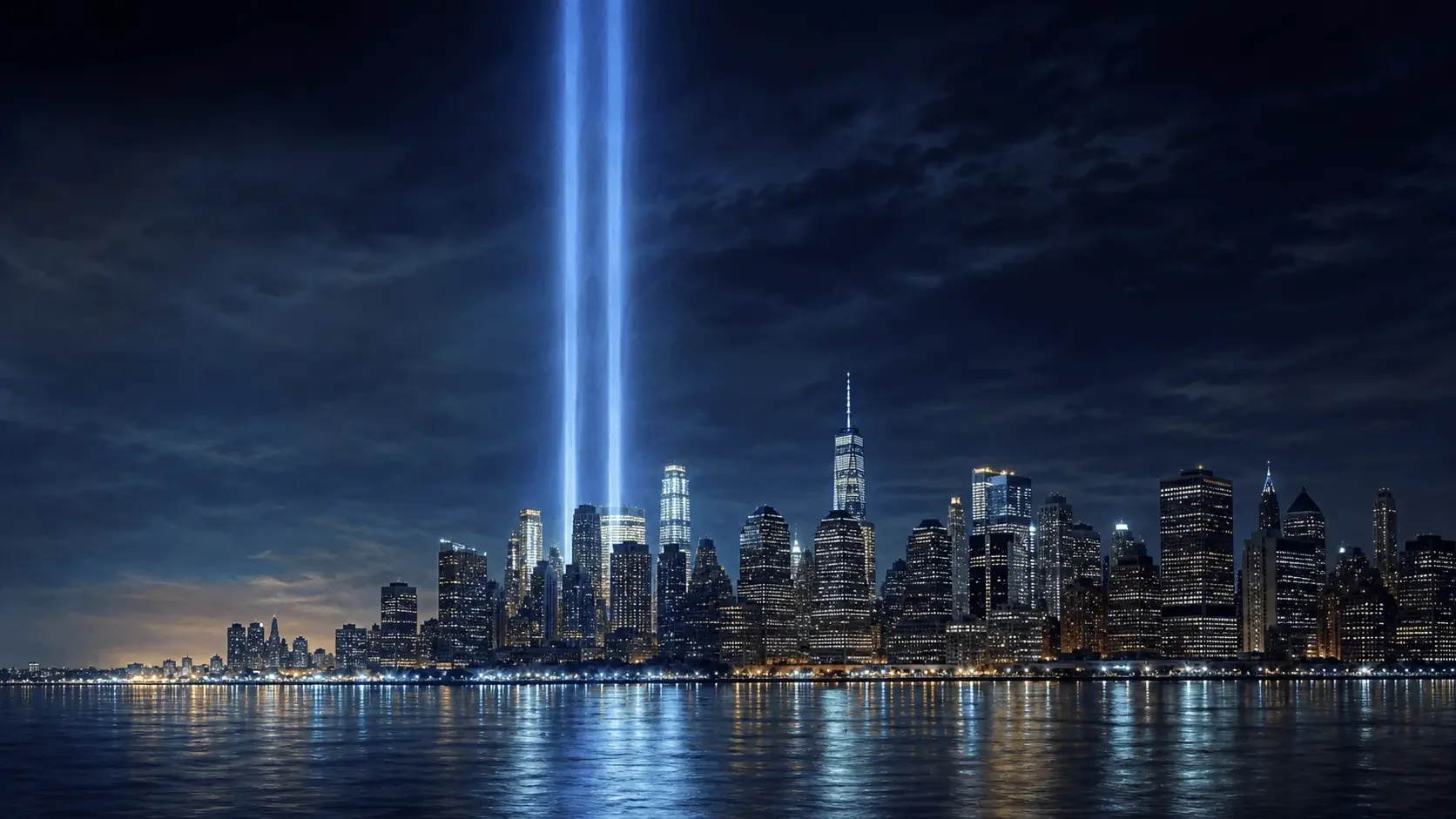
All three principal attack sites now contain major memorials that preserve a direct connection to the events. The National September 11 Memorial & Museum occupies part of the former World Trade Center site in lower Manhattan, with reflecting pools set in the footprints of the Twin Towers and museum spaces within the archaeological site. The National 9/11 Pentagon Memorial in Arlington stands beside the area where Flight 77 struck the Pentagon. Flight 93 National Memorial near Shanksville preserves the crash site and commemorates the forty passengers and crew members aboard the aircraft.
Last updated August 13, 2026