About Bulow Plantation Ruins Historic State Park
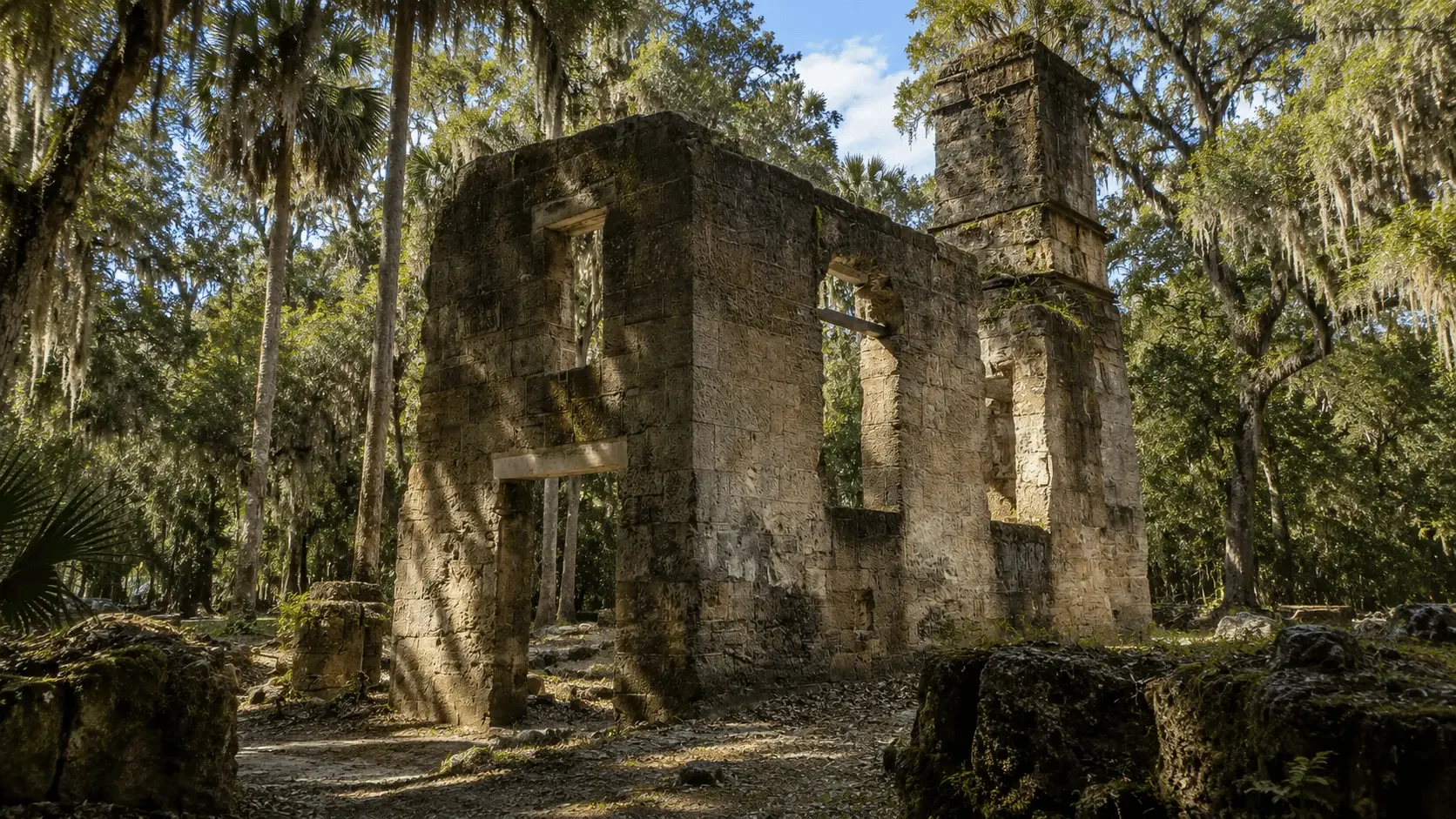
Bulow Plantation Ruins Historic State Park preserves the remains of a large East Florida plantation established beginning in 1821. Enslaved African and African American laborers cleared and worked the property, producing crops that included sugarcane, cotton, rice and indigo. The plantation's coquina sugar mill and other structures were destroyed in 1836 amid the Second Seminole War, leaving substantial masonry ruins that document both the region's plantation economy and the conflict that brought it to an end.
A short trail leads visitors through the wooded former plantation landscape to the tall mill walls, chimneys and surviving industrial features. Interpretive exhibits and archaeological remains address plantation operations and the people whose labor sustained them, while the surrounding park offers picnicking, fishing, paddling access to Bulow Creek and connections to longer hiking routes. The combination of industrial ruins, natural scenery and difficult social history makes the park an important place for considering early Florida beyond its better-known coastal settlements.