
About This Event
Apollo 11 was the first mission to land humans on the Moon, the culmination of an American effort shaped by Cold War competition and President John F. Kennedy’s 1961 goal of landing a person on the Moon and returning safely to Earth before the decade ended. By 1969, NASA had developed the Saturn V rocket, Apollo spacecraft, lunar module, worldwide tracking network, and mission-control systems needed for the attempt, while earlier Apollo missions had tested the hardware and techniques in Earth and lunar orbit. On July 16, 1969, Neil Armstrong, Edwin “Buzz” Aldrin, and Michael Collins launched from Kennedy Space Center’s Launch Complex 39A aboard a Saturn V.
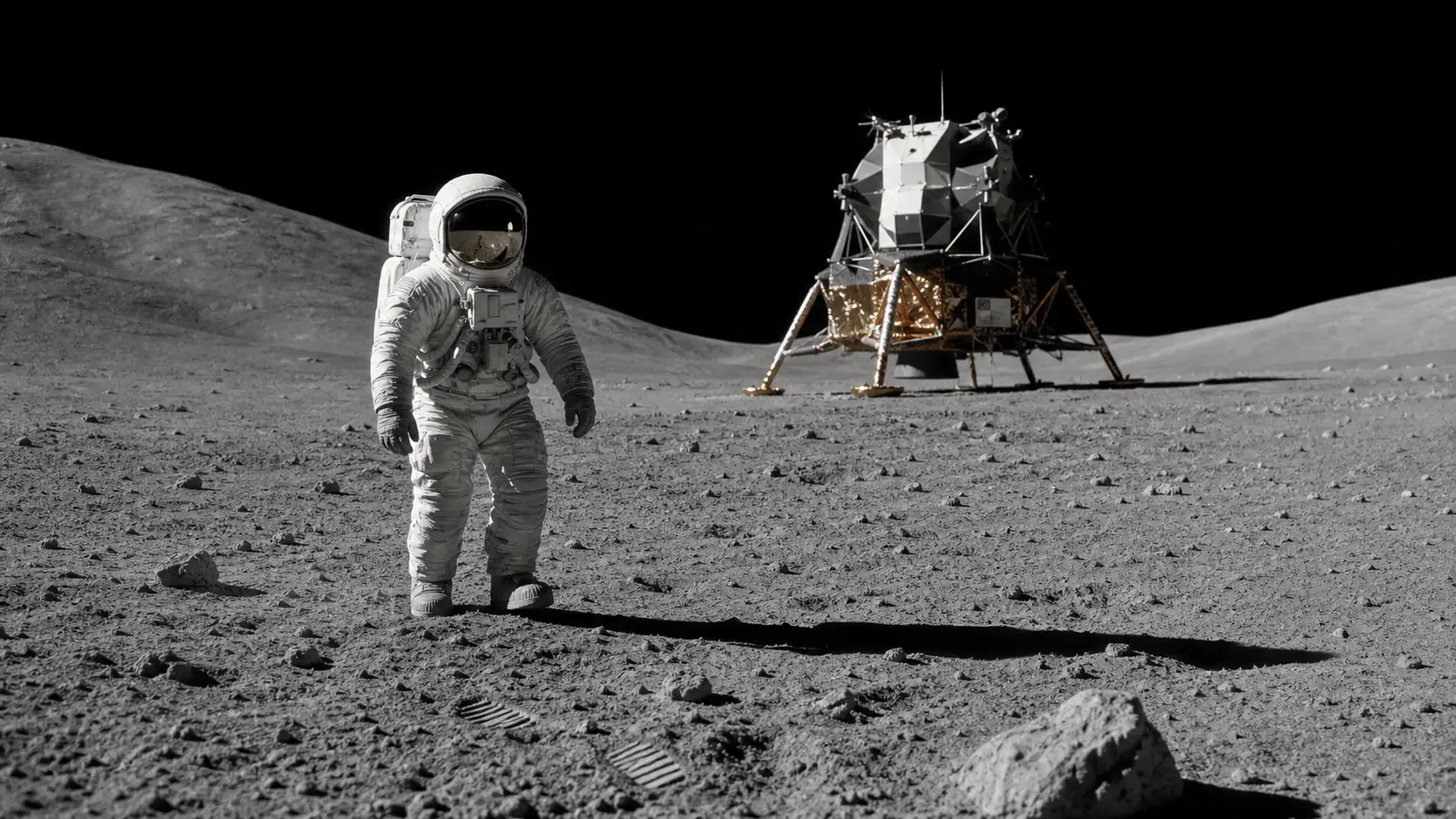
After entering lunar orbit, Armstrong and Aldrin transferred to the lunar module Eagle while Collins remained in the command module Columbia. On July 20, Eagle descended toward the Sea of Tranquility. Armstrong took partial manual control during the final approach as the crew maneuvered away from a hazardous landing area, and the lunar module touched down. Several hours later, Armstrong stepped onto the lunar surface, becoming the first person to walk on the Moon; Aldrin followed. During their surface excursion, the two astronauts photographed the landing site, deployed scientific experiments, collected lunar samples, and planted the U.S. flag. Collins continued orbiting the Moon alone in Columbia, maintaining the spacecraft that would bring all three astronauts home.
Armstrong and Aldrin later lifted off from the lunar surface in Eagle’s ascent stage and rejoined Collins in lunar orbit. After the crew transferred back into Columbia, the lunar module was discarded and the astronauts began the return to Earth. The command module splashed down in the Pacific Ocean on July 24 and was recovered by the USS Hornet. Because scientists could not yet rule out the possibility of harmful lunar microorganisms, the astronauts entered quarantine after recovery; the precaution was later discontinued for subsequent Apollo missions when evidence showed the Moon presented no biological hazard of that kind.
Apollo 11 fulfilled Kennedy’s national goal and demonstrated that NASA could coordinate an extraordinarily complex system of spacecraft, launch facilities, computers, communications networks, contractors, engineers, flight controllers, and astronauts. The mission also produced scientific material from another world and gave researchers new evidence about lunar geology and the early history of the Earth-Moon system. Its live television coverage reached a vast international audience, turning a technical achievement of the Space Race into a shared global event. Five more Apollo missions later landed astronauts on the Moon, expanding the scientific work begun by Apollo 11.
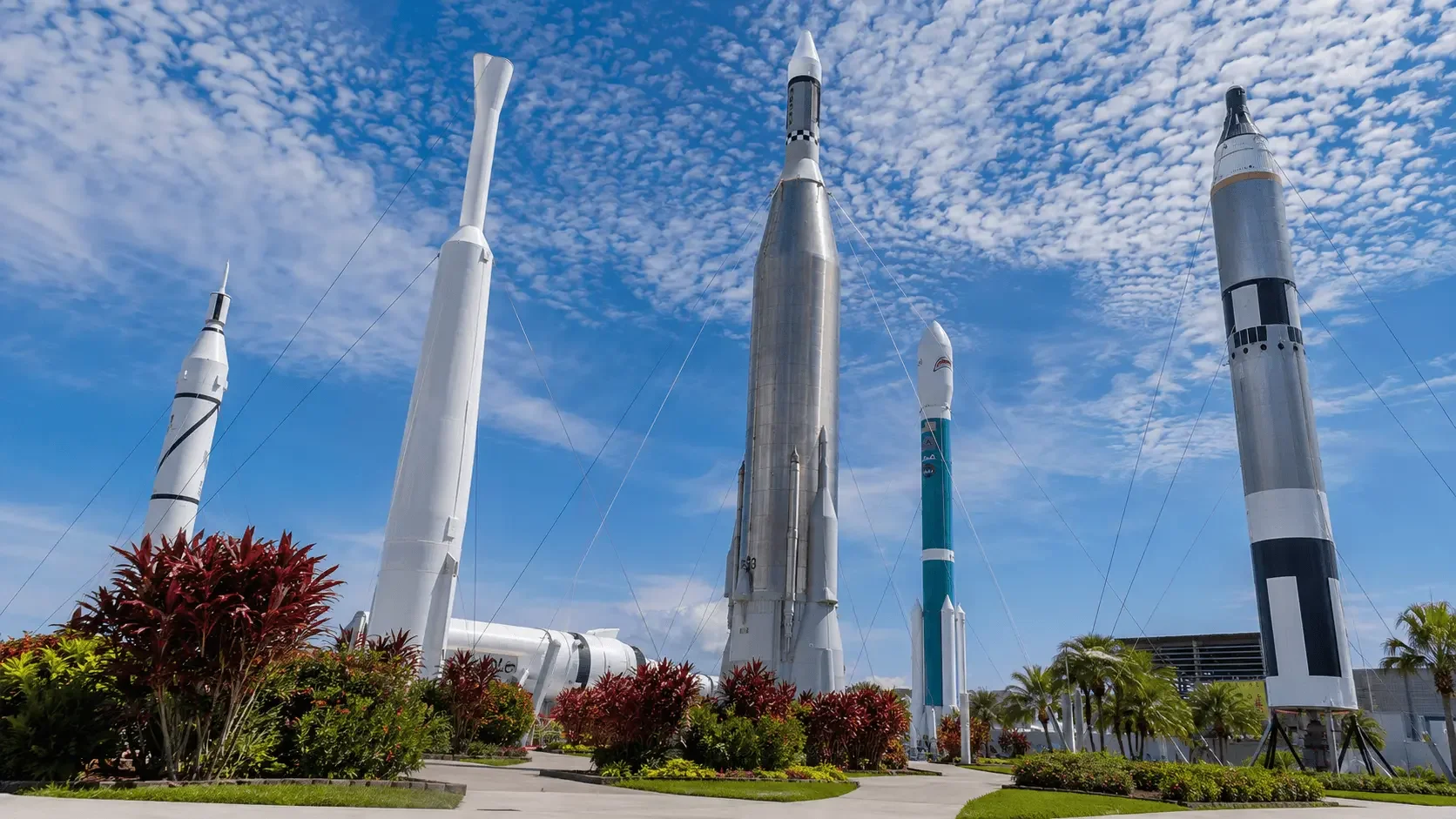
Visitors can encounter Apollo 11 history at several places closely tied to the mission. Kennedy Space Center in Florida preserves the launch environment of Complex 39, and its visitor complex interprets the Apollo program near the facilities from which Apollo 11 departed. At NASA’s Johnson Space Center in Houston, the restored Apollo Mission Control Center retains the room and consoles used by flight controllers during the mission and is accessible through Space Center Houston tours. The Smithsonian’s National Air and Space Museum preserves major Apollo 11 artifacts, including the command module Columbia and other objects that connect the mission’s engineering story with the people who carried it out.
Last updated August 13, 2026