
About Lewis & Clark State Historic Site
Lewis & Clark State Historic Site in Hartford interprets Camp Dubois, the winter encampment where the Corps of Discovery assembled, trained, organized supplies, and prepared for its journey up the Missouri River. The Corps occupied the camp from late 1803 until its departure in May 1804, making this landscape near the Mississippi-Missouri confluence an important starting point in the Lewis and Clark story.
The site's interpretive center contains approximately 14,000 square feet of exhibition space devoted to the background, preparation, journey, and legacy of the expedition. One of its most distinctive displays is a full-scale cutaway replica of the keelboat used to illustrate how the Corps packed and carried the large volume of supplies needed for the trip. A theater presentation introduces visitors to Camp Dubois and the expedition's preparations.
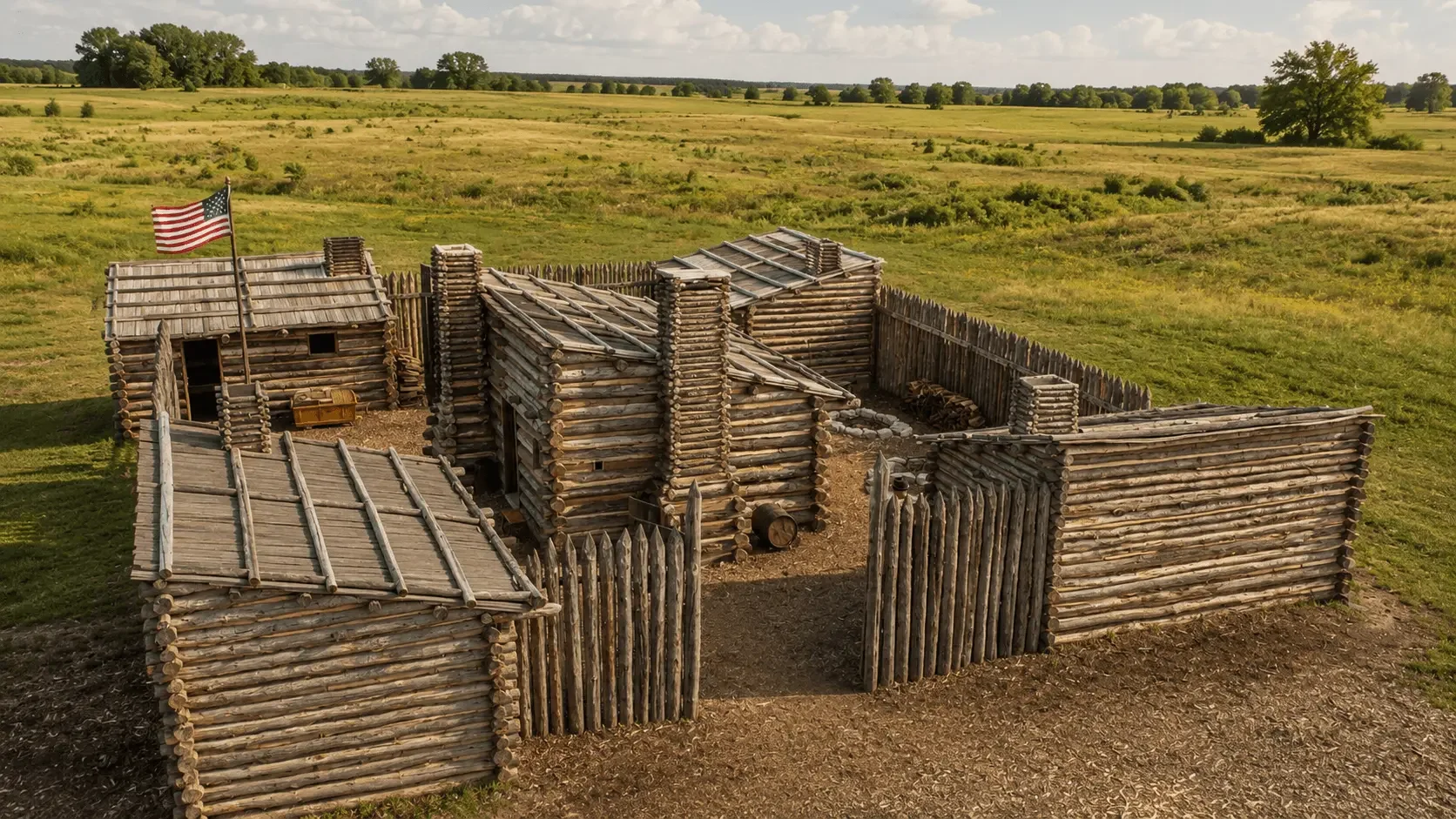
Outside, visitors can explore a reconstruction of the winter camp designed to reflect early nineteenth-century U.S. Army construction practices, along with a reconstructed settler's cabin and nearby memorial features. The exact location of the original Camp Dubois cannot be identified with certainty because the Mississippi and Missouri rivers have changed course over the past two centuries, but the historic site provides a strong physical and interpretive connection to the expedition's point of departure.