About This Event
The assassination of Abraham Lincoln occurred just as the American Civil War was nearing its close. Confederate General Robert E. Lee had surrendered the Army of Northern Virginia to Ulysses S. Grant at Appomattox Court House on April 9, 1865, and Washington was celebrating the apparent collapse of the Confederacy. John Wilkes Booth, a well-known actor and committed Confederate sympathizer who opposed emancipation and Black citizenship, had previously organized a plot to kidnap Lincoln. With the Confederacy failing, Booth shifted to a plan to kill the president and other senior federal officials.
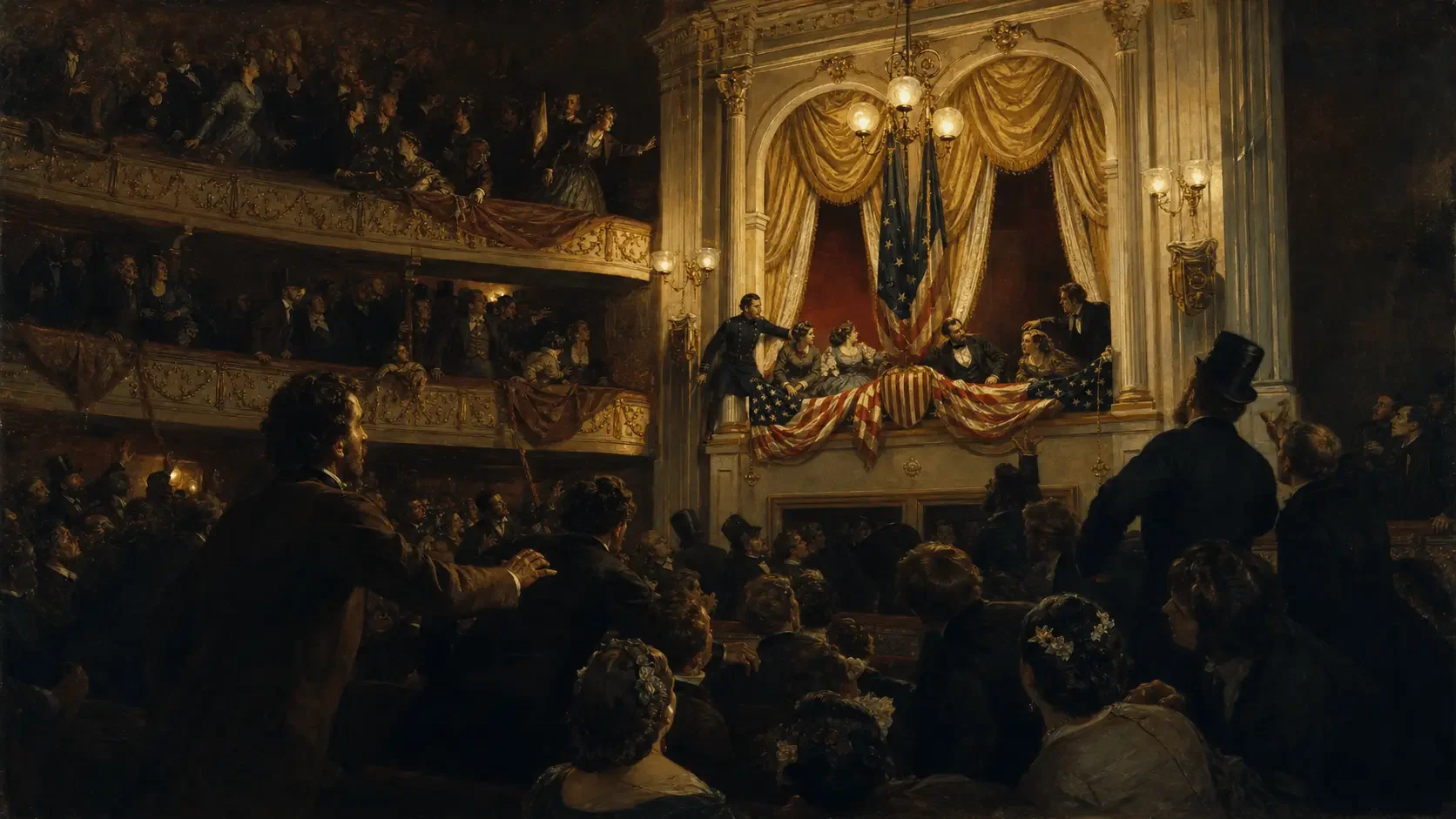
On the evening of April 14, Lincoln attended the comedy “Our American Cousin” at Ford’s Theatre with Mary Lincoln, Major Henry Rathbone, and Clara Harris. At about 10:15 p.m., Booth entered the presidential box and shot Lincoln in the back of the head. He then escaped from the theater and fled Washington. The wider conspiracy also targeted Vice President Andrew Johnson and Secretary of State William H. Seward. George Atzerodt failed to attack Johnson, while Lewis Powell entered Seward’s home and seriously wounded the secretary and several others. Lincoln, too badly injured to be moved far, was carried across Tenth Street to the Petersen boarding house, where physicians kept vigil through the night.
Lincoln died at 7:22 a.m. on April 15. Andrew Johnson took the presidential oath later that morning, creating an abrupt transfer of power at the beginning of Reconstruction. Secretary of War Edwin M. Stanton helped direct the investigation and manhunt. Booth escaped into Maryland with David Herold, received medical treatment from Dr. Samuel Mudd, and continued south through rural Maryland and Virginia. Federal troops found Booth at the Garrett farm in Virginia on April 26; he was shot and died there. Eight accused conspirators were tried by a military commission, and four—including Mary Surratt—were executed.
Lincoln’s murder made him the first U.S. president to be assassinated and plunged the country into mourning at the moment it faced the enormous tasks of reunion, emancipation, and reconstruction. The assassination did not predetermine the course of Reconstruction, but it removed Lincoln from decisions over how the former Confederate states would return and how the federal government would protect newly freed people. The event remains closely tied to a network of surviving places. Ford’s Theatre and the Petersen House preserve the locations of the shooting and Lincoln’s death, while sites in Maryland associated with Booth’s escape, including the Surratt House and Dr. Samuel Mudd House, allow visitors to trace parts of the conspiracy and manhunt beyond Washington.
Last updated August 13, 2026