About This Event
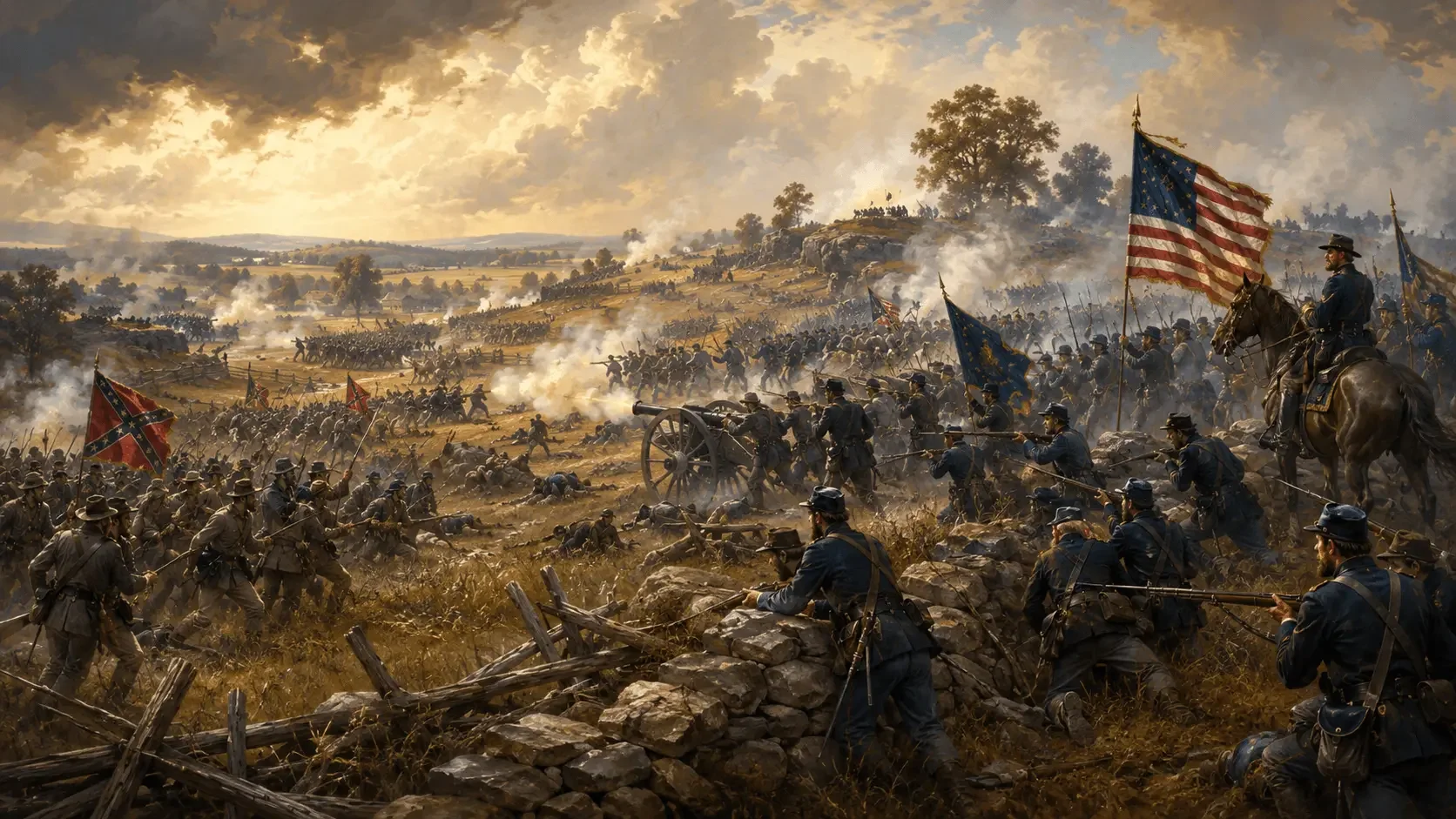
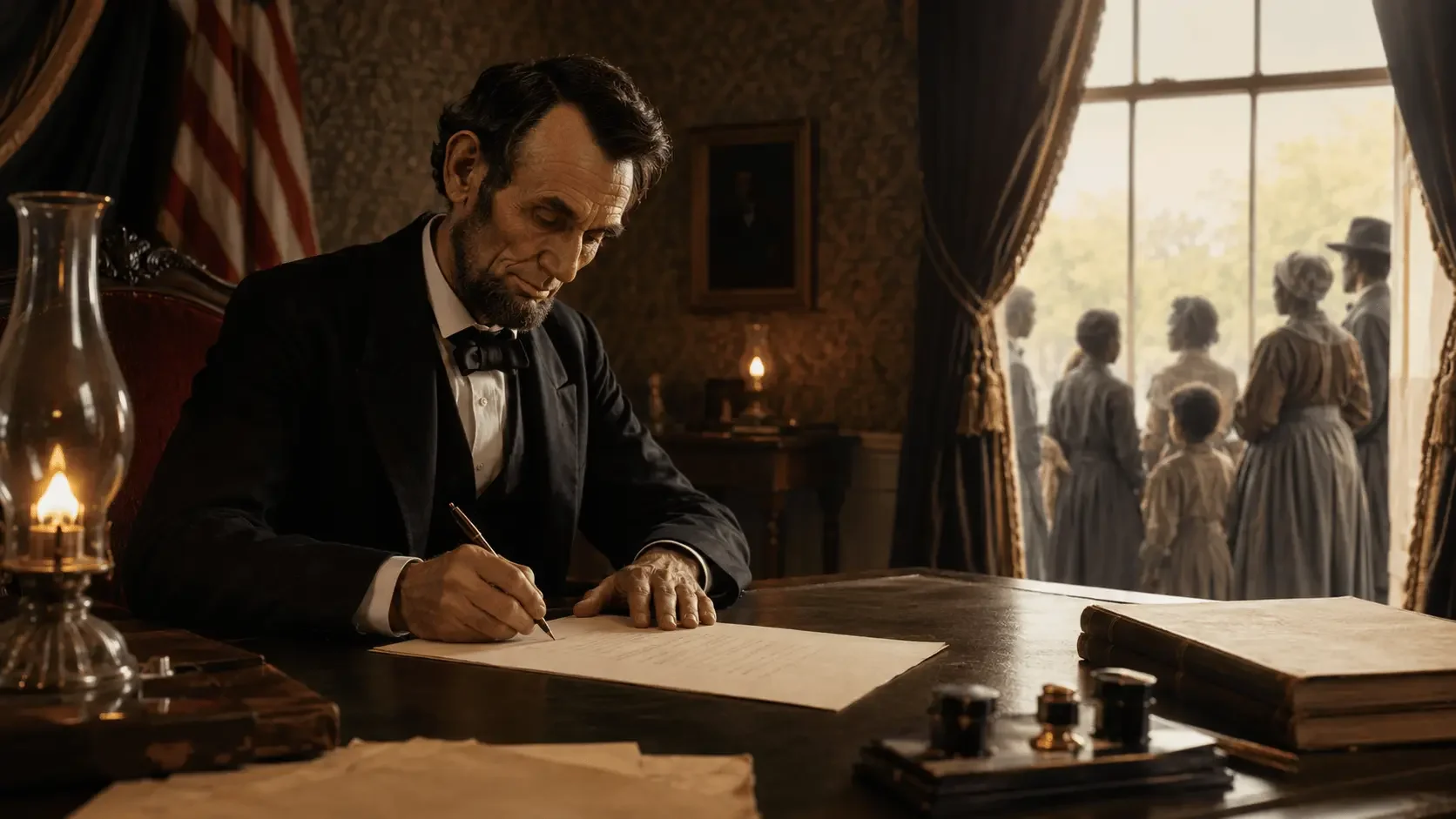
The Emancipation Proclamation was an executive proclamation issued by President Abraham Lincoln on January 1, 1863, during the American Civil War. Slavery had caused the sectional crisis that led to secession, but Lincoln initially described preservation of the Union as the federal government’s immediate war objective. As the conflict continued, enslaved people escaped to Union lines, Congress passed measures weakening slavery, and military leaders confronted the practical question of what to do about people held in bondage by those supporting the Confederacy. Lincoln increasingly viewed emancipation as both a military necessity and a step against the institution sustaining the rebellion.
After the Union checked Robert E. Lee’s invasion of Maryland at the Battle of Antietam, Lincoln issued a preliminary proclamation on September 22, 1862. It warned that on January 1 he would declare enslaved people free in states or parts of states still in rebellion. The final Emancipation Proclamation did exactly that. It did not immediately free every enslaved person in the United States: it excluded the loyal slaveholding border states and specified areas of the Confederacy already under Union control. Its practical reach also depended on Union military success. Even so, the document announced that the United States government would recognize and maintain the freedom of people enslaved in designated rebellious territory.
The proclamation also authorized the enlistment of Black men in the United States armed forces. By the end of the Civil War, nearly 200,000 Black soldiers and sailors had served the Union, strengthening the war effort while making Black military service inseparable from the struggle over freedom and citizenship. As Union armies advanced, enslaved people themselves played a decisive role by leaving plantations, seeking protection, reuniting families when possible, working for the Union, and in many cases joining the military. Emancipation therefore unfolded through the interaction of federal policy, military power, and the actions of enslaved people.
The proclamation fundamentally changed the meaning and conduct of the war, but it was not a nationwide abolition amendment. Permanent abolition required the Thirteenth Amendment, ratified in December 1865. The proclamation nevertheless made emancipation an explicit Union objective, reduced the possibility that European powers would intervene on behalf of the Confederacy, and gave federal authority to a process of liberation already underway. Visitors can see the original document at the National Archives in Washington when it is displayed under controlled conditions, explore Lincoln’s wartime decision-making at President Lincoln’s Cottage, and visit Antietam National Battlefield, whose September 1862 battle provided the political moment after which Lincoln announced the preliminary proclamation.
Last updated August 13, 2026