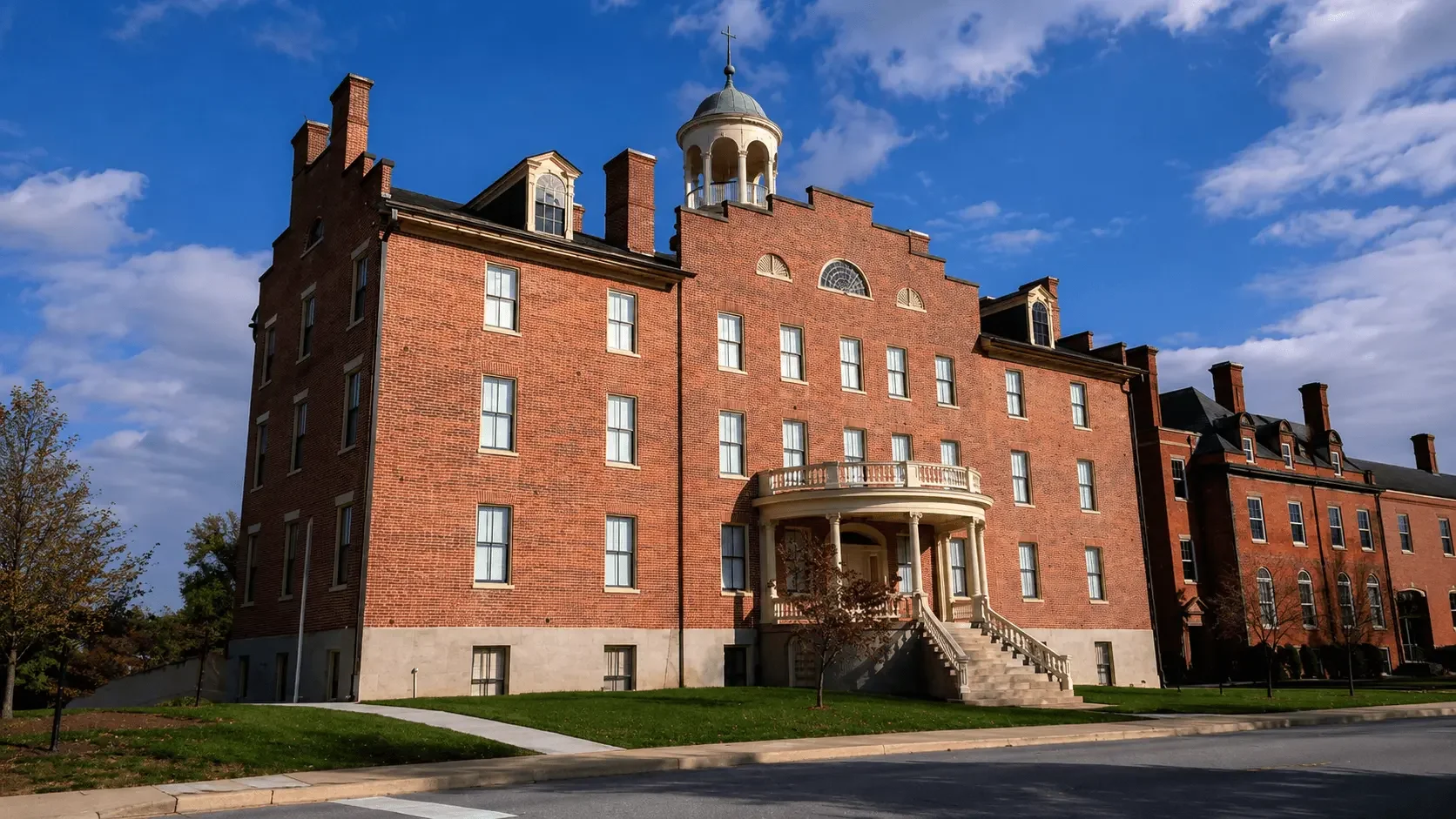
About This Event
The Battle of Gettysburg was fought July 1–3, 1863, around the small crossroads town of Gettysburg, Pennsylvania, during the American Civil War. Confederate General Robert E. Lee had led the Army of Northern Virginia north after victories in Virginia, hoping to gather supplies, threaten Northern cities, influence public opinion, and perhaps win a battle on Union soil that could strengthen the Confederacy’s political position. The Union Army of the Potomac, newly commanded by Major General George G. Meade, moved to intercept him. Neither army initially planned to make Gettysburg the site of a major battle, but cavalry and infantry encounters west and north of town drew more units into the fight.
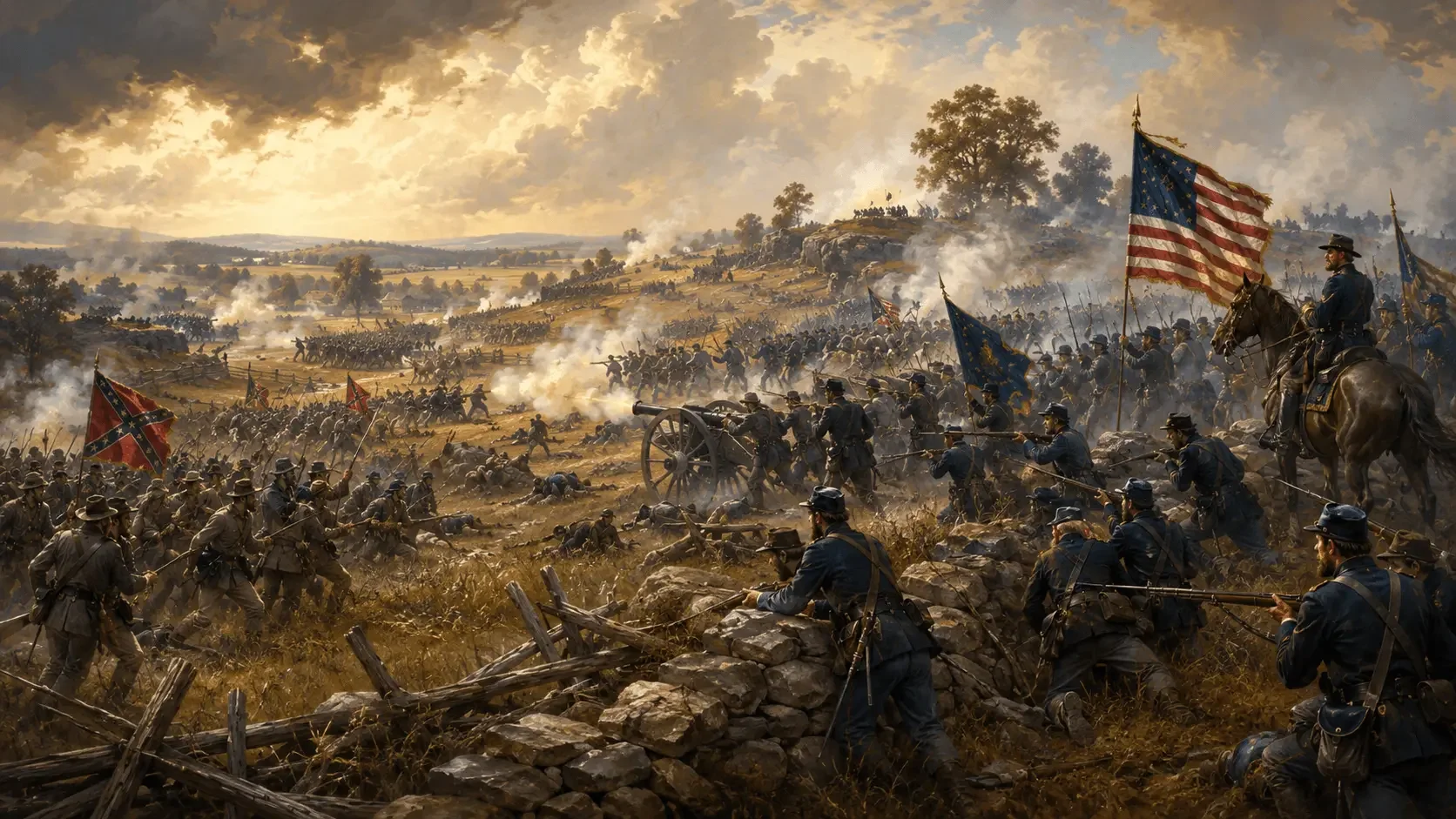
On July 1, Confederate forces pushed Union troops back through Gettysburg, but the Union army established a strong defensive position on high ground south of town, including Cemetery Hill and Cemetery Ridge. On July 2, Lee ordered attacks against both ends of the Union line. Heavy fighting swept across places now known as Little Round Top, the Wheatfield, the Peach Orchard, and Culp’s Hill. Union defenders held their position despite severe losses. On July 3, after renewed fighting at Culp’s Hill, Lee ordered a massive infantry assault across open ground toward the Union center on Cemetery Ridge. The attack, commonly called Pickett’s Charge, was repulsed with heavy Confederate casualties.
Lee’s army began retreating toward Virginia on July 4. The battle had cost the two armies more than 50,000 men killed, wounded, captured, or missing, making Gettysburg one of the bloodiest battles of the Civil War. The town and surrounding farms became an enormous hospital and burial ground. Civilians cared for wounded soldiers from both armies while officials and families struggled to identify and bury the dead. Later that year, Union dead were reinterred in the new Soldiers’ National Cemetery, where President Abraham Lincoln delivered the Gettysburg Address on November 19, 1863.
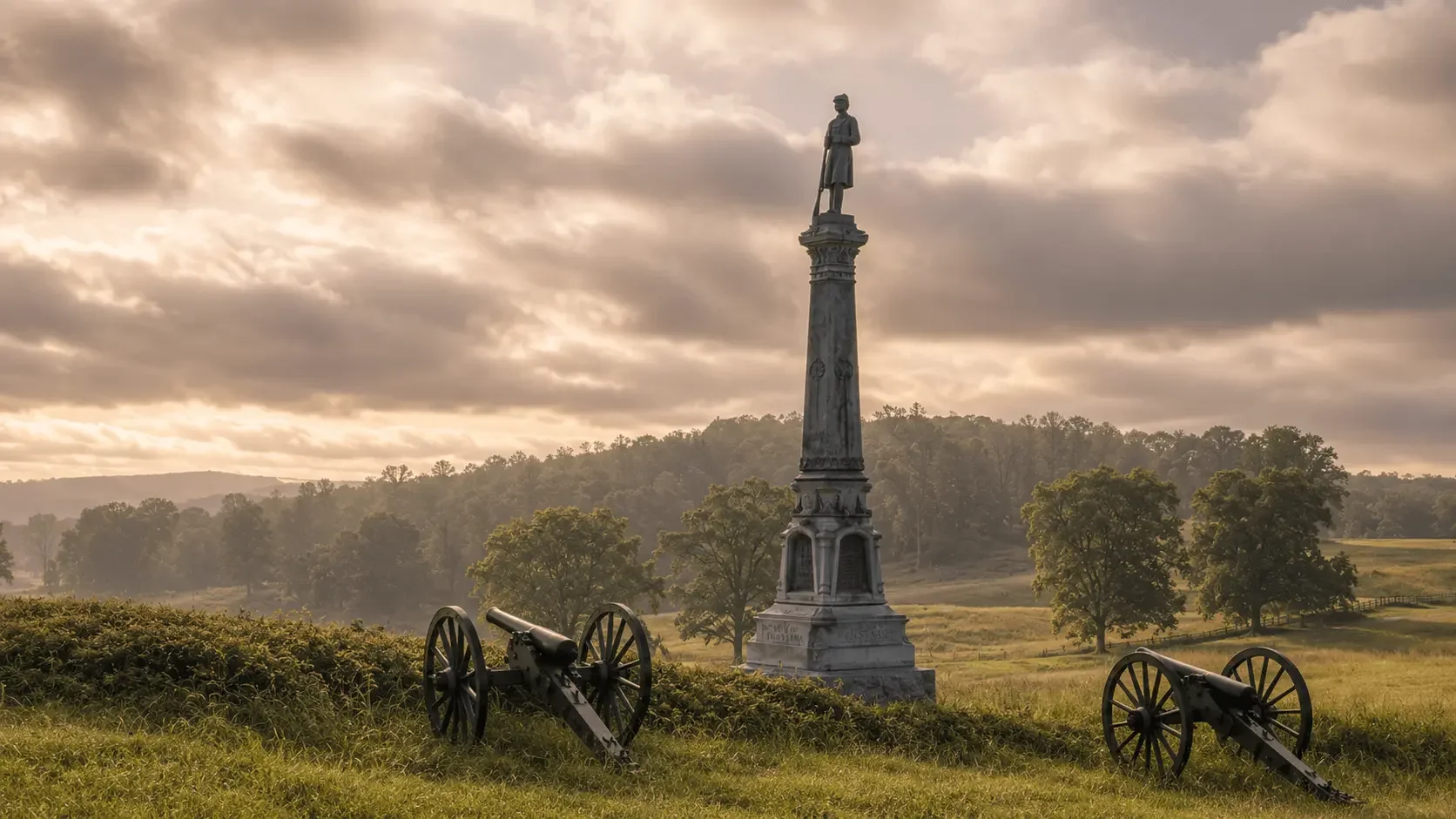
Gettysburg did not end the Civil War, which continued for nearly two more years, but it stopped Lee’s major invasion of the North and forced the Army of Northern Virginia back into Virginia. Combined with the Union victory at Vicksburg on the Mississippi River, it marked an important shift in the war’s strategic balance. The preserved battlefield makes the event unusually tangible today: Gettysburg National Military Park protects major sections of the landscape, including Seminary Ridge, Cemetery Ridge, Little Round Top, and Culp’s Hill, while Gettysburg National Cemetery preserves the ground where the Union dead were reburied and Lincoln reframed the war as a test of democratic government and a struggle for a “new birth of freedom."
Last updated August 13, 2026