About This Event
The Great Chicago Fire began on the evening of October 8, 1871, after a long period of unusually dry weather left the rapidly growing city vulnerable to fire. Chicago contained thousands of wooden houses, businesses, sidewalks, fences, sheds, and industrial structures, while lumber and other combustible materials were stored throughout busy districts. Strong winds helped turn a local blaze into a citywide disaster. The fire started on or near the property of Patrick and Catherine O’Leary on DeKoven Street, but historians have never established the exact ignition source. The famous story that Mrs. O’Leary’s cow kicked over a lantern is a legend, not a verified explanation.
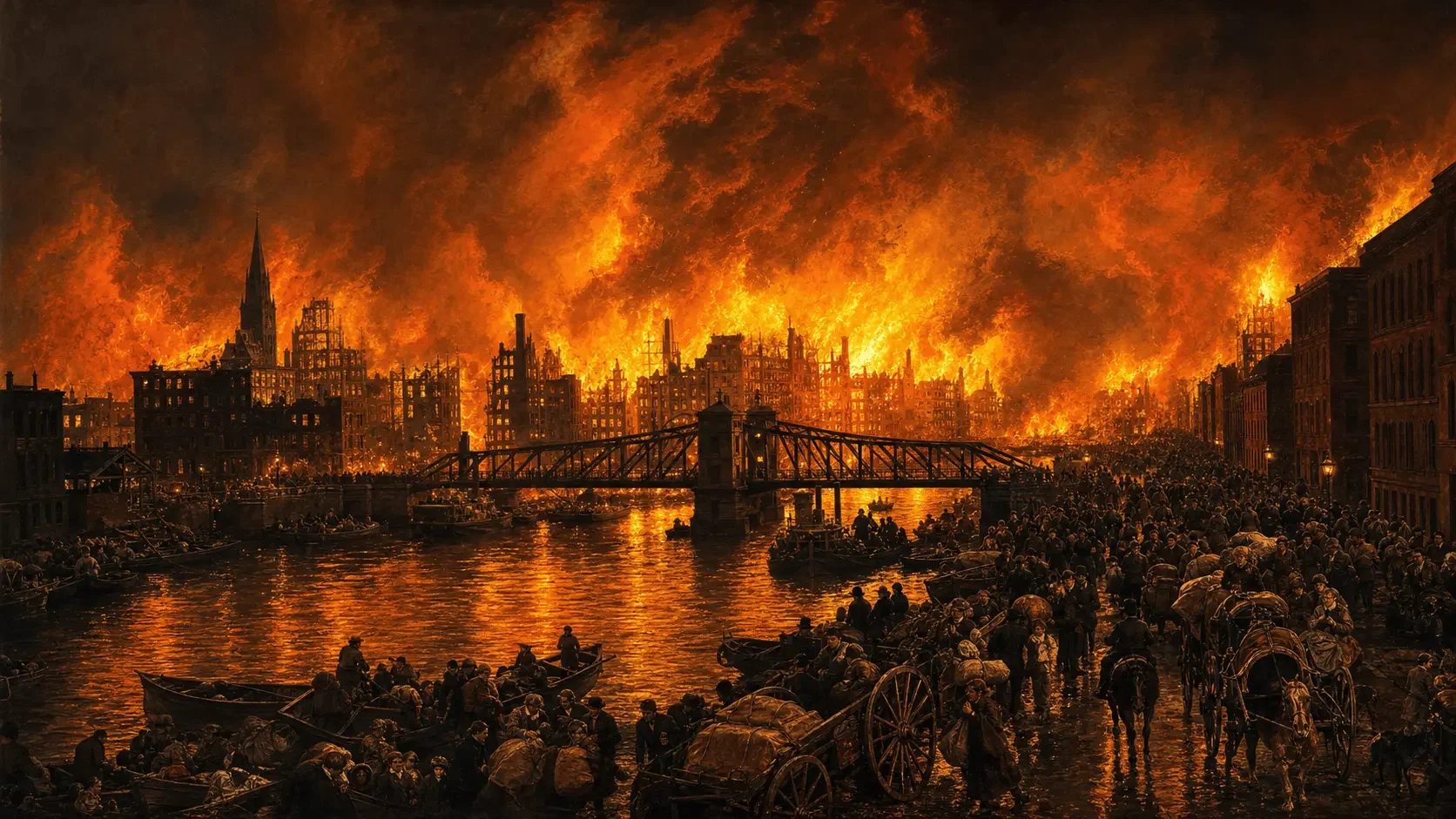
Flames spread quickly north and east, driven by wind, flying embers, and an urban landscape packed with combustible material. The fire crossed branches of the Chicago River and entered the central business district, where it destroyed offices, hotels, newspaper buildings, public structures, warehouses, and homes. It then moved into neighborhoods on the North Side. Firefighters were already exhausted from earlier fires, and the scale and speed of the blaze overwhelmed available equipment. The fire burned for roughly a day and a half before weakening on October 10; rainfall and changes in conditions helped bring the disaster to an end.
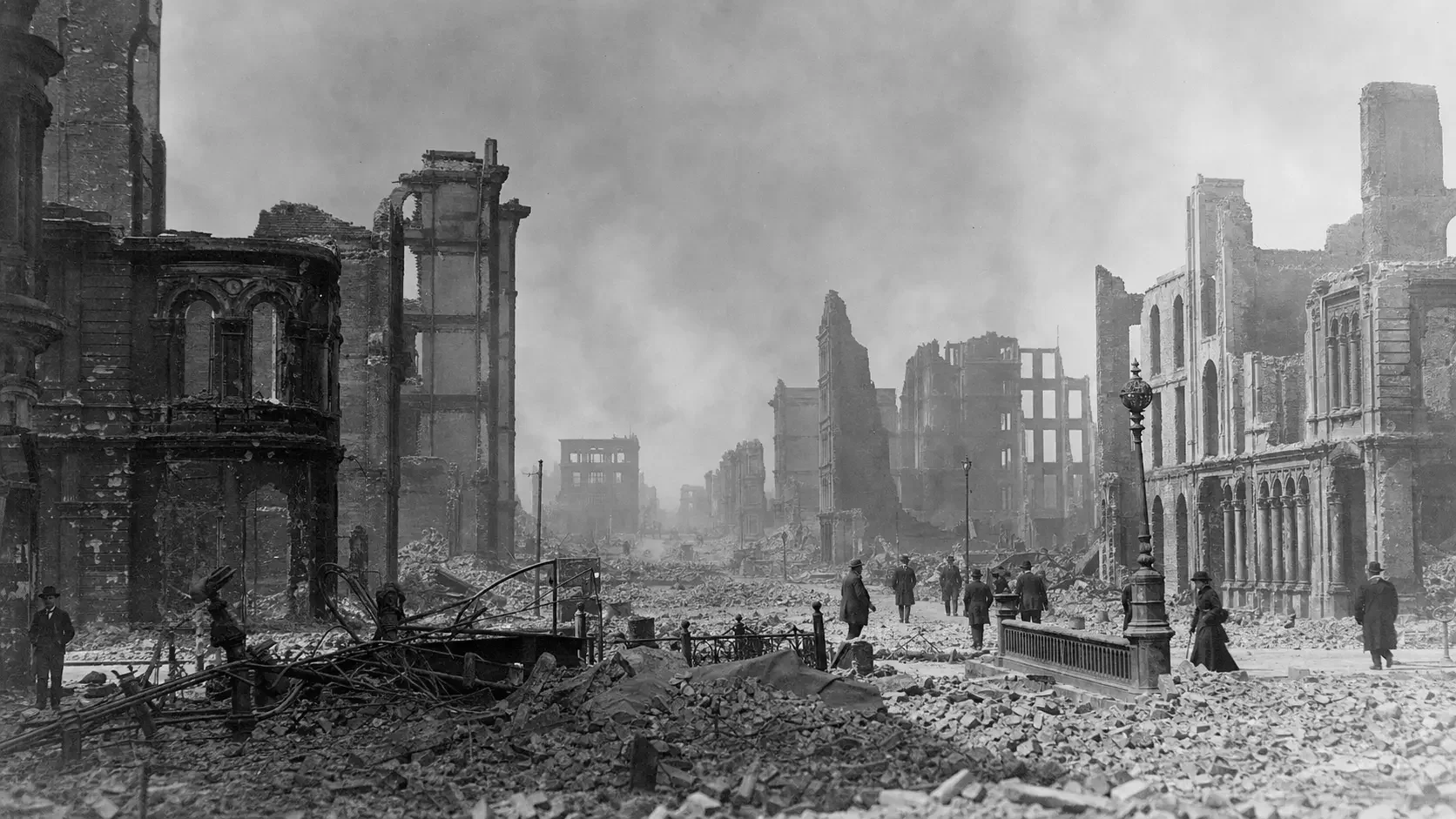
The destruction was immense. Modern official summaries estimate that about 300 people died, roughly 100,000 residents were left homeless, and approximately 17,500 buildings were destroyed across more than three square miles. Relief organizations, churches, governments, and private donors responded with food, clothing, shelter, and money. Chicago rebuilt rapidly, but recovery did not affect every resident equally. Immigrant communities and working-class families faced displacement and hardship, while the O’Leary family—Irish Catholic immigrants—became targets of a sensational story that reflected ethnic prejudice as much as evidence about the fire.
The fire became a turning point in Chicago’s physical development and in debates over urban fire safety. Rebuilding encouraged greater use of masonry and other fire-resistant construction in central districts, while officials tightened building and fire regulations over time. The rebuilt city later became a center of architectural experimentation, although the fire alone did not create modern skyscraper design. Several surviving landmarks still connect visitors to the event. The Chicago Water Tower and nearby Pumping Station endured the fire and became enduring symbols of the disaster and recovery. The Chicago History Museum preserves objects, images, maps, and stories that help place the fire within the larger history of immigration, urban growth, rebuilding, and public memory.
Last updated August 13, 2026