About This Event
The Spanish-American War grew out of struggles over Spanish colonial rule, especially the Cuban War of Independence that began in 1895. Reports of Spanish repression in Cuba, U.S. economic interests, humanitarian concern, and intense newspaper coverage increased pressure on President William McKinley and Congress to intervene. Tensions rose sharply after the battleship USS Maine exploded in Havana Harbor on February 15, 1898, killing 266 men. Investigators at the time blamed an external cause, though later studies have not established with certainty what triggered the explosion. Congress adopted a joint resolution supporting Cuban independence and authorizing force, and Spain and the United States entered war in April.
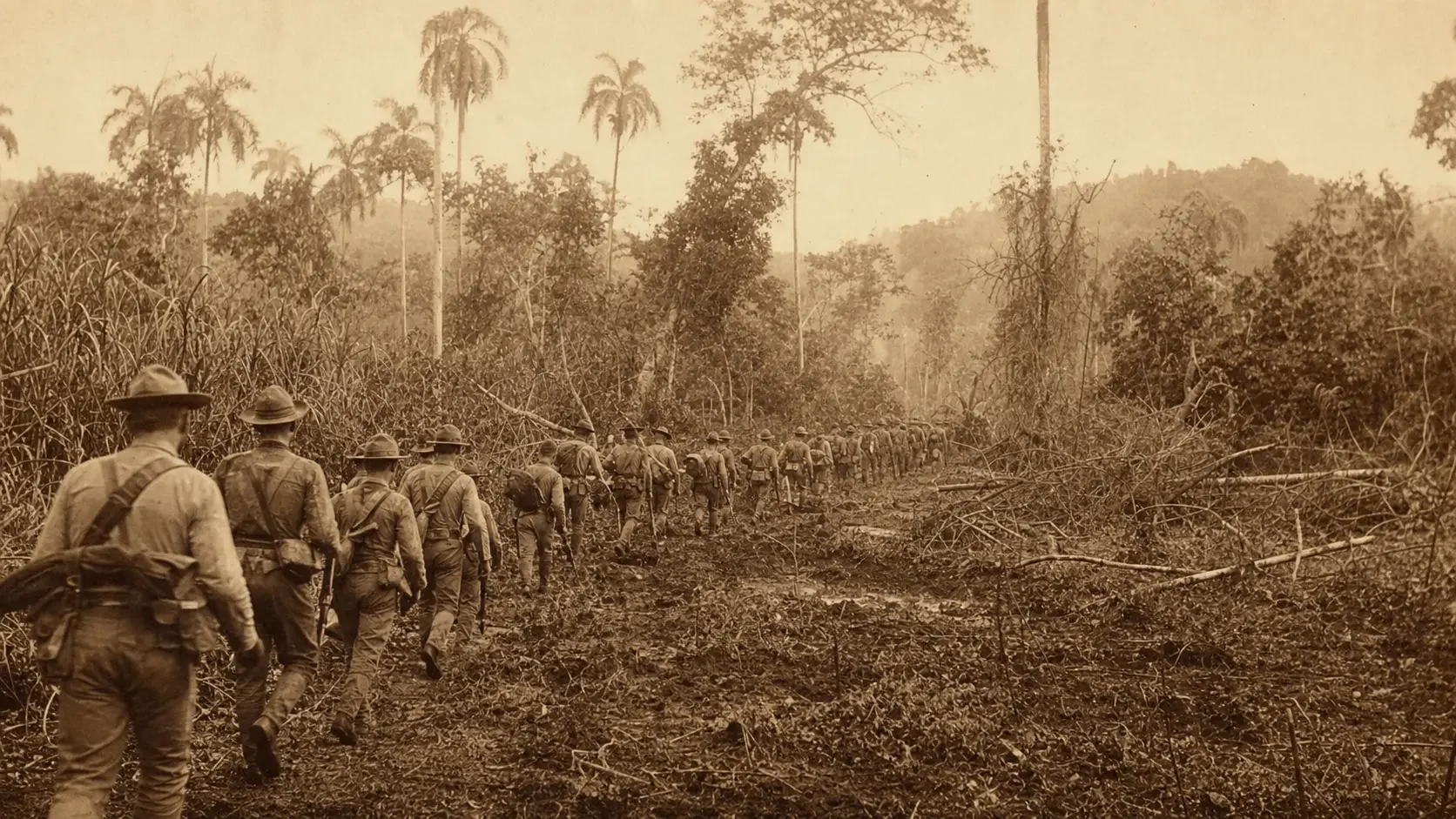
The conflict quickly spread beyond Cuba. On May 1, Commodore George Dewey’s U.S. Asiatic Squadron defeated the Spanish fleet at Manila Bay in the Philippines. In Cuba, U.S. troops landed near Santiago in June and fought major actions around San Juan Heights on July 1. Units involved included regular Army regiments, Black soldiers of the 9th and 10th Cavalry and 24th Infantry, and the volunteer regiment popularly known as the Rough Riders, associated with Theodore Roosevelt. The destruction or surrender of Spanish naval forces around Santiago made Spain’s position increasingly untenable. U.S. forces also landed in Puerto Rico, while other Spanish possessions in the Pacific came under American control.
A peace protocol ended major hostilities in August, and the Treaty of Paris was signed on December 10, 1898. Spain relinquished sovereignty over Cuba and ceded Puerto Rico, Guam, and the Philippines to the United States; the United States paid Spain $20 million in connection with the transfer of the Philippines. Cuba came under U.S. military occupation before establishing a formally independent republic in 1902 under conditions that preserved significant U.S. influence. In the Philippines, many Filipino revolutionaries who had fought Spanish rule rejected replacement of Spanish sovereignty with American rule, leading to the Philippine-American War.
The Spanish-American War lasted only a few months, but its consequences were wide-ranging. It accelerated the emergence of the United States as an overseas imperial power and sparked a major domestic debate over annexation, citizenship, race, and the meaning of self-government. It also tied U.S. policy more directly to the Caribbean and Pacific. Visitors can explore this history at San Juan National Historic Site in Puerto Rico, where Spanish fortifications were bombarded during the war; at the Presidio of San Francisco, a major staging point for troops sent across the Pacific; and aboard the preserved cruiser USS Olympia in Philadelphia, Dewey’s flagship at the Battle of Manila Bay.
Last updated August 13, 2026