About This Event
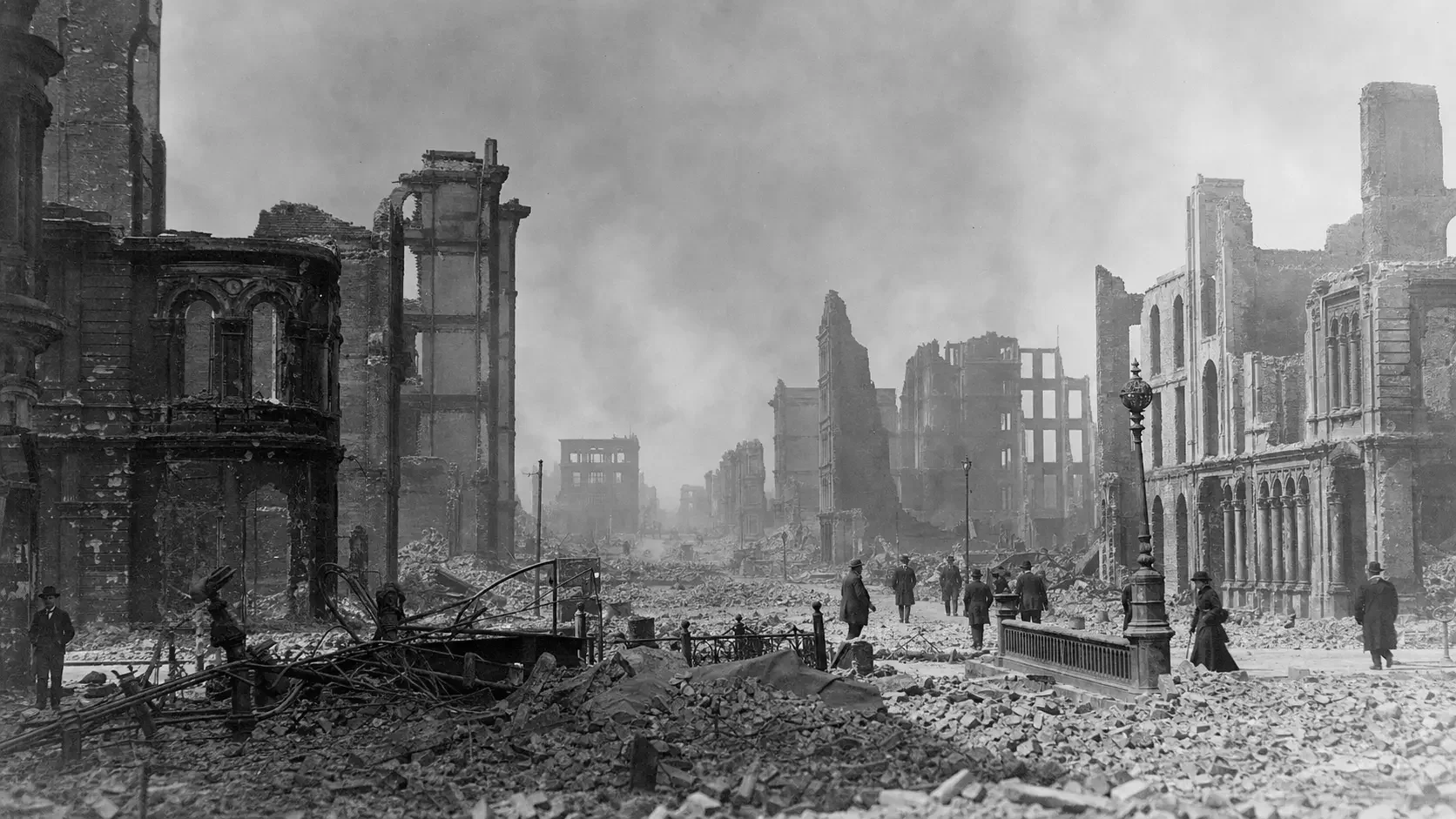
At 5:12 a.m. on April 18, 1906, a powerful earthquake struck northern California along the San Andreas Fault. Modern estimates place its magnitude at about 7.8. Violent shaking damaged communities from the San Francisco Bay Area northward and southward along a long section of the fault, but San Francisco suffered the most famous destruction. Buildings collapsed, streets cracked, and utility lines failed. The earthquake itself lasted less than a minute in the city, yet it triggered a second disaster that continued for days.
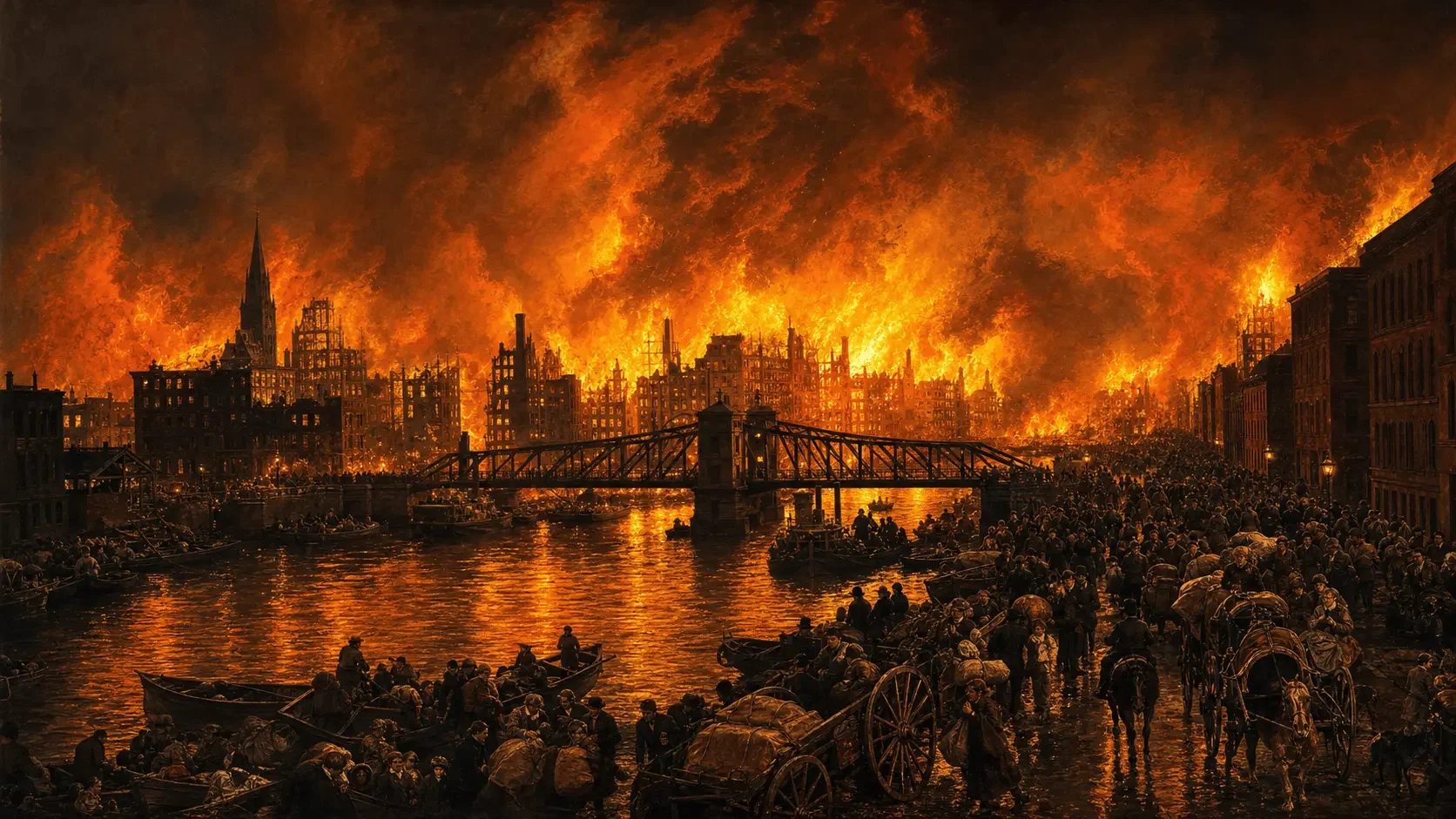
Dozens of fires ignited after the shaking. Broken water mains left firefighters with too little water in many districts, while damaged gas lines, overturned stoves, electrical problems, and other hazards contributed to new outbreaks. Some attempts to create firebreaks with explosives caused additional damage and, in places, spread flames. For roughly three days, fire moved through large sections of the city, including the downtown business district and Chinatown. By the time the major fires ended, more than 28,000 buildings had been destroyed and about 4.7 square miles had burned.
The human toll was enormous. The U.S. Geological Survey now estimates that more than 3,000 people died, replacing much lower totals published in the early twentieth century, and about 225,000 people were left homeless in a city of roughly 400,000. The U.S. Army, city officials, relief organizations, and volunteers established camps, distributed food, maintained order, and built temporary housing. The Presidio and other military posts became major centers for relief. Chinese residents of San Francisco faced the same physical devastation as other communities as well as discriminatory attempts to relocate Chinatown away from valuable central land; community resistance and international pressure helped prevent permanent forced relocation.
The earthquake also transformed scientific understanding. A state commission led by University of California geologist Andrew C. Lawson studied the rupture and published a landmark report in 1908. Observations from the disaster helped support the elastic rebound theory, a foundation of modern earthquake science. San Francisco rebuilt rapidly, and the catastrophe influenced later approaches to construction, emergency planning, and seismic risk, though improvements came unevenly over time. Visitors can connect the event to the Presidio, where soldiers organized relief and surviving refugee cottages are preserved, and to Fort Mason, which served as an Army headquarters for relief operations. These sites show that the 1906 disaster was not only a moment of destruction but also a major episode in urban recovery, scientific investigation, and debates over who would shape the rebuilt city.
Last updated August 13, 2026