About This Event
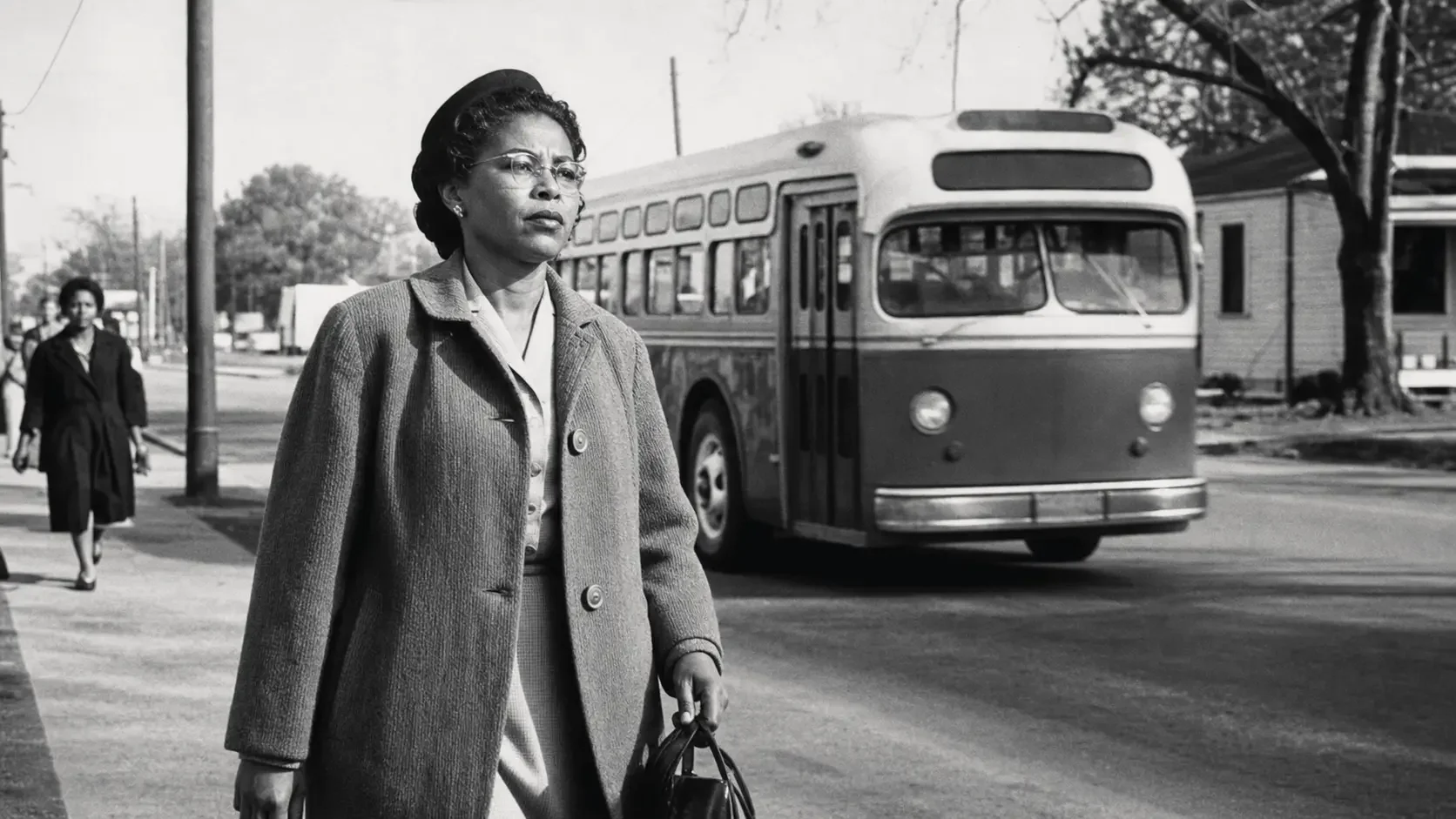
The Montgomery Bus Boycott emerged from a long struggle against racial segregation on public transportation in Montgomery, Alabama. Black passengers made up a large share of the city bus system’s riders but were required by local law and custom to use segregated seating and could be ordered to surrender seats to white passengers. Activists had challenged these practices before 1955. In March of that year, teenager Claudette Colvin was arrested after refusing to give up her seat. On December 1, longtime NAACP member Rosa Parks was arrested for refusing a bus driver’s order to surrender her seat to a white passenger. Her arrest gave local organizers a case around which they could mobilize broad community support.
Jo Ann Robinson of the Women’s Political Council and other activists rapidly circulated tens of thousands of leaflets calling for a one-day boycott on Monday, December 5. The response was overwhelming. That evening, community leaders organized the Montgomery Improvement Association and selected 26-year-old Dexter Avenue Baptist Church pastor Martin Luther King Jr. as its president. At a mass meeting at Holt Street Baptist Church, participants committed to continue the protest. Because many Black residents depended on buses to reach work, organizers created a sophisticated carpool system with volunteer drivers and pickup points, while many people walked long distances every day.
The boycott continued despite arrests, traffic citations, economic pressure, threats, and violence. King’s home and other Black institutions were bombed, and city authorities tried to disrupt the carpool. At the same time, attorney Fred Gray pursued a federal legal challenge in Browder v. Gayle on behalf of Aurelia Browder, Susie McDonald, Claudette Colvin, and Mary Louise Smith. A federal district court ruled Montgomery’s bus segregation unconstitutional in June 1956. The U.S. Supreme Court affirmed that decision in November, and the federal order ending segregation took effect in December. After 381 days of protest, the boycott concluded; on December 21, Black riders returned to integrated city buses.
The Montgomery movement demonstrated the power of sustained local organizing that combined mass nonviolent protest, churches and civic networks, fundraising, transportation logistics, and courtroom strategy. It brought Martin Luther King Jr. to national attention but was never the work of one person: women organizers, working people, students, ministers, lawyers, and thousands of riders sustained it. The victory provided a practical model for later civil rights campaigns across the South and helped build relationships that contributed to the formation of the Southern Christian Leadership Conference in 1957. Visitors can explore this history at the Rosa Parks Museum, Dexter Avenue King Memorial Baptist Church, the Dexter Parsonage Museum, and Holt Street Baptist Church, places directly connected to the arrest, organizing, leadership, and mass meetings that sustained the boycott.
Last updated August 13, 2026