
About This Event
The Boston Tea Party took place on December 16, 1773, after years of conflict over Parliament’s authority to tax and regulate Britain’s North American colonies. The immediate dispute centered on the Tea Act of 1773. Contrary to a common misconception, the law did not create a new tea tax; the existing Townshend duty remained. Instead, Parliament gave the financially troubled East India Company favorable terms for selling tea directly in the colonies. The arrangement could lower consumer prices, but it threatened colonial merchants and revived the larger constitutional argument over taxation without colonial representation.
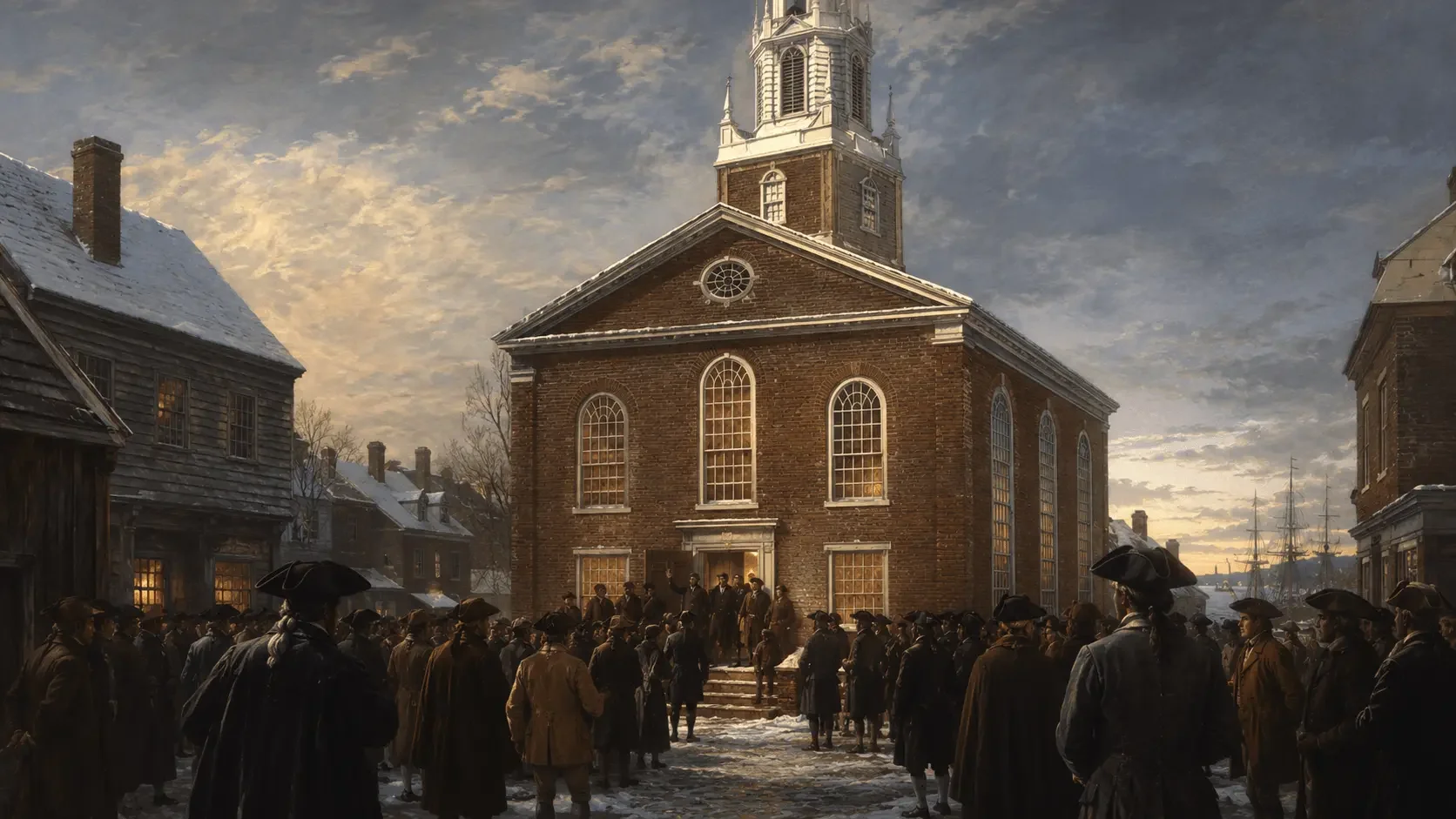
Resistance prevented East India Company tea from being landed in several colonial ports. In Boston, however, Governor Thomas Hutchinson refused to let the tea ships leave without following customs law. The Dartmouth arrived first, followed by the Eleanor and Beaver, creating a standoff as a deadline approached for the tea to be unloaded and duties paid. Public meetings drew large crowds. On December 16, as many as several thousand people gathered at Old South Meeting House while colonial leaders tried unsuccessfully to find a legal way to send the tea back to Britain.
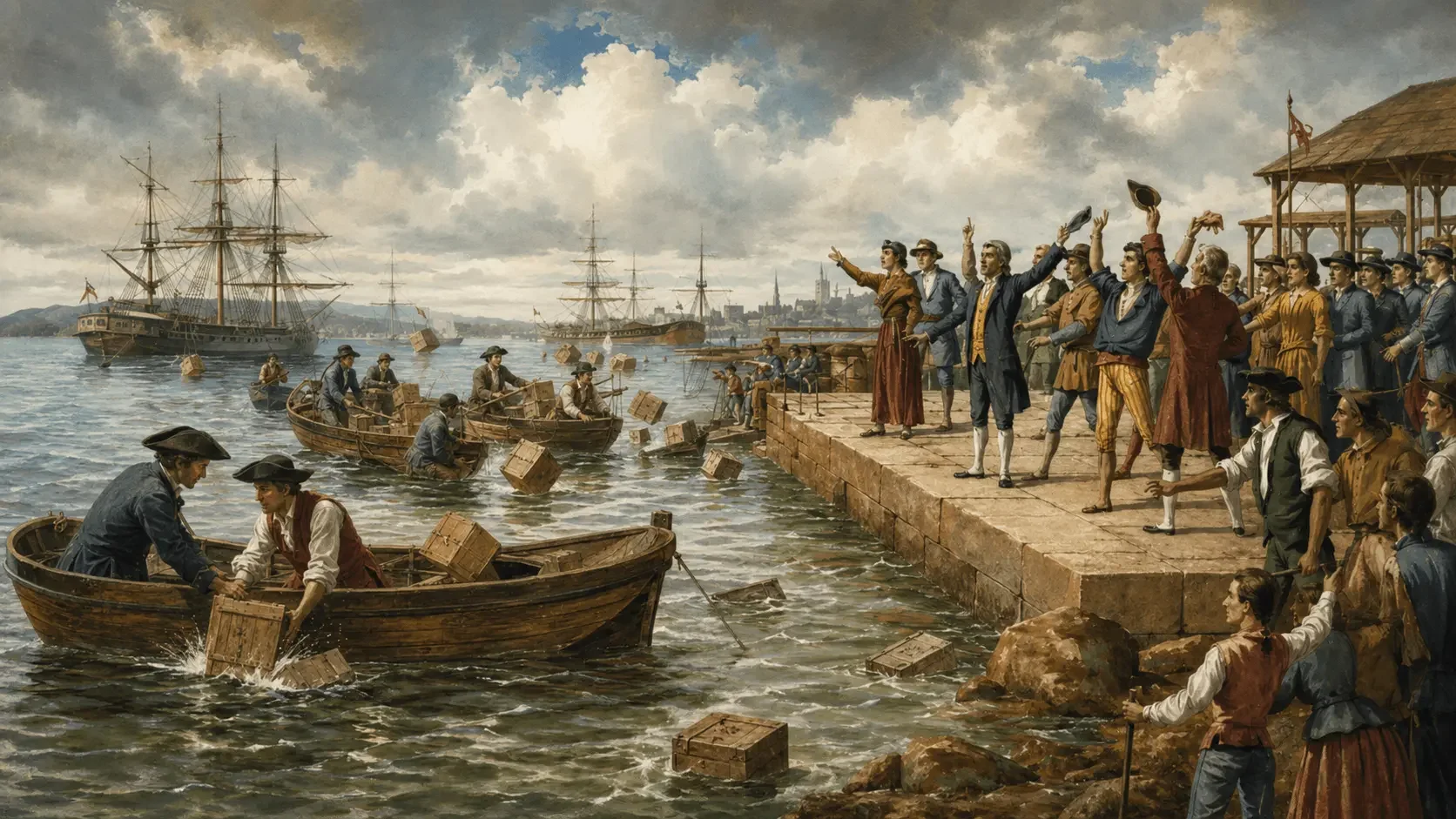
That evening, a group of men—many with soot-darkened faces and some using forms of Indigenous dress as disguises—went to Griffin’s Wharf. They boarded the Dartmouth, Eleanor, and Beaver and methodically broke open 342 chests of East India Company tea, throwing the contents into Boston Harbor. The destruction targeted the tea rather than the ships or crew, but it represented a deliberate attack on valuable company property and a direct rejection of parliamentary policy. Because participants protected their identities, the precise number and complete roster of those involved remain uncertain.
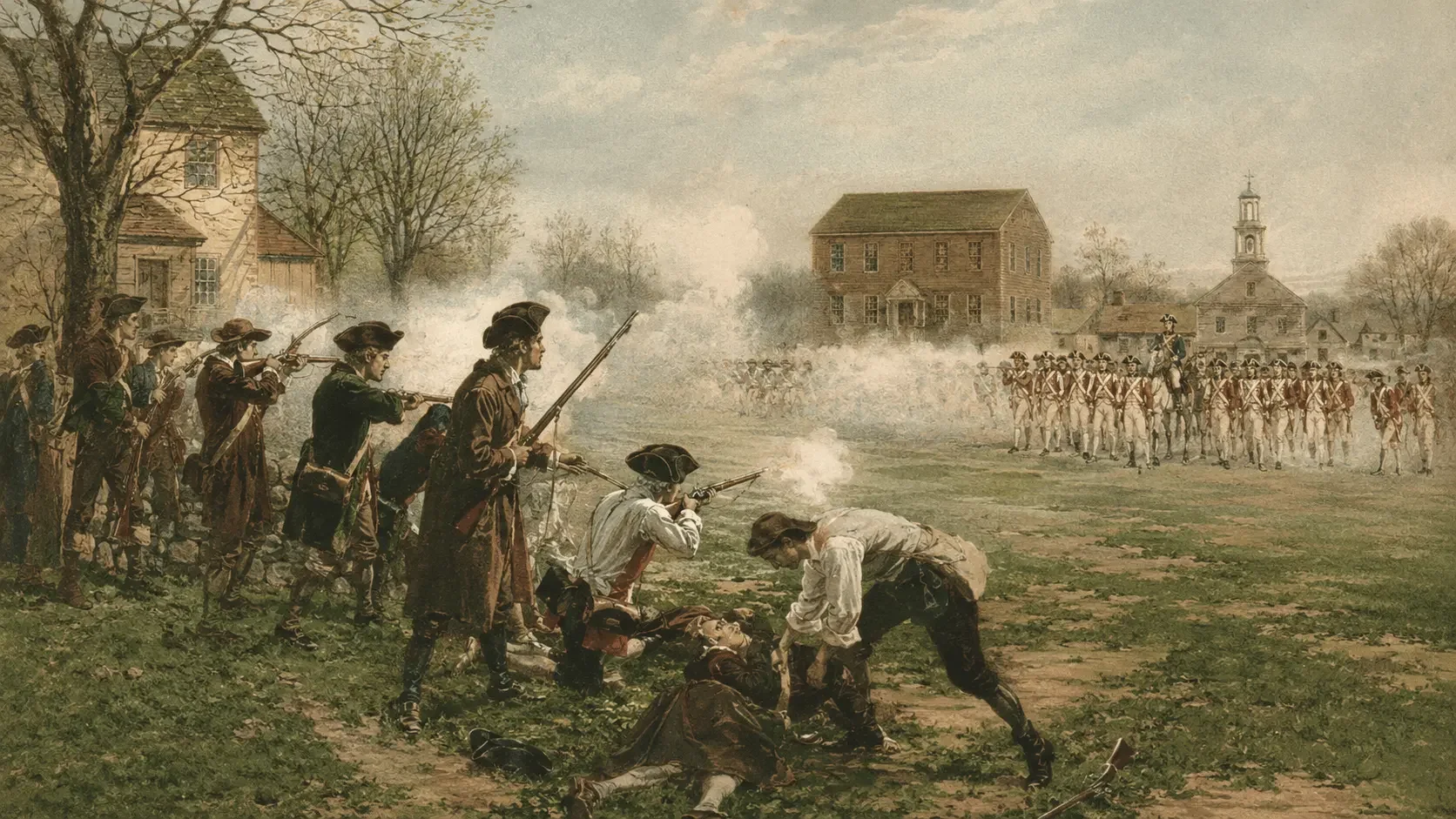
Parliament responded in 1774 with measures the British government called the Coercive Acts and colonists widely called the Intolerable Acts. Among other steps, Britain closed the Port of Boston until compensation was made and sharply restricted Massachusetts self-government. Rather than isolating Massachusetts, the punishment encouraged other colonies to send aid and coordinate opposition. The escalating crisis helped lead to the First Continental Congress later in 1774 and contributed to the atmosphere in which armed conflict began at Lexington and Concord in April 1775.
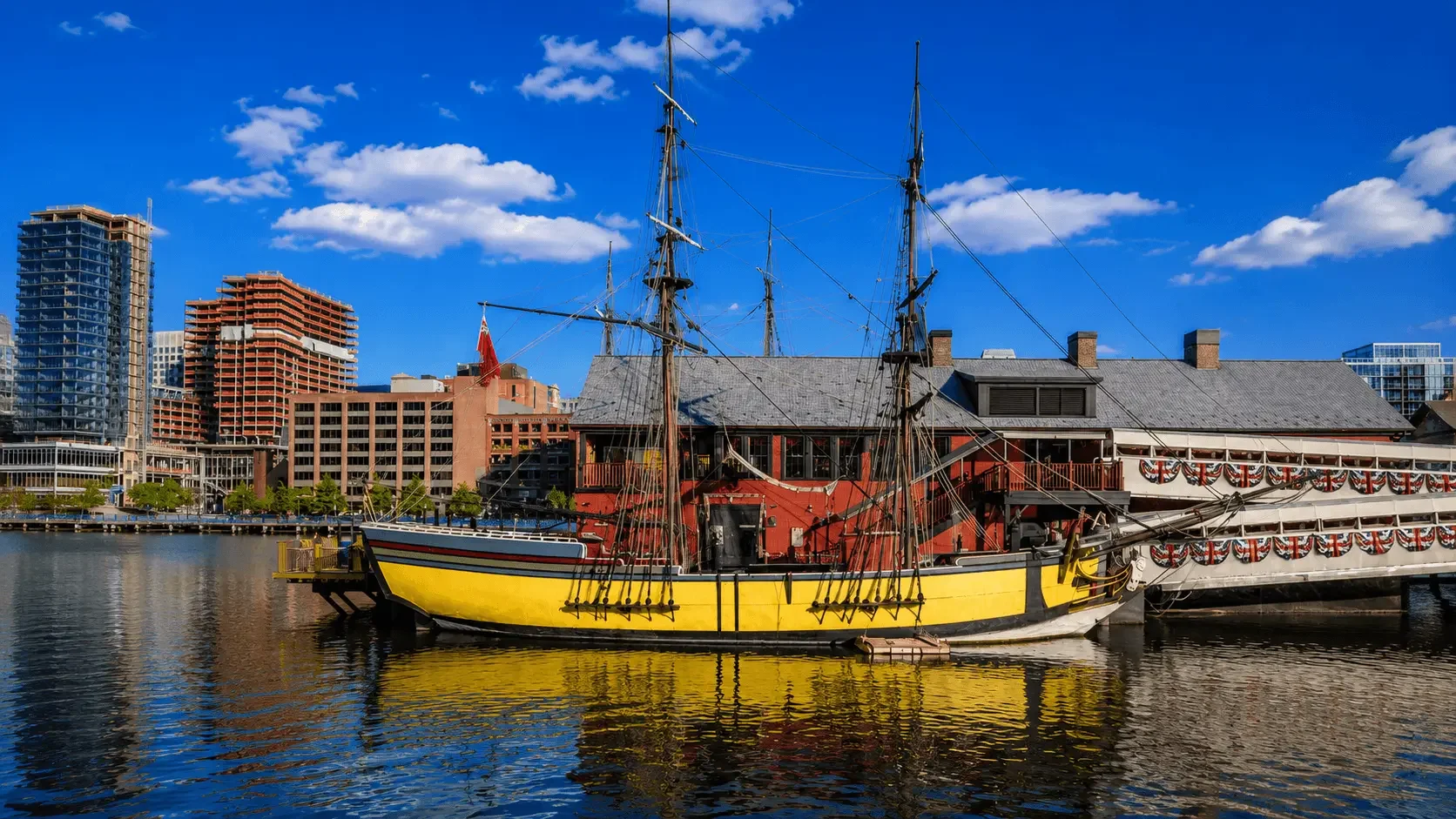
The Tea Party can be experienced today at several sites in central Boston. Old South Meeting House preserves the building where the December 16 mass meeting took place. The Boston Tea Party Ships & Museum, located near the historic waterfront, interprets the destruction of the tea through exhibits and reconstructed vessels. The original shoreline and wharf environment have changed substantially, but these destinations place visitors close to the geography where political protest became organized destruction of property and pushed the imperial crisis toward revolution.
Last updated August 13, 2026