About This Event
The Yorktown campaign of 1781 grew from a rare convergence of American, French, and British decisions. British General Charles Cornwallis had campaigned through the South before moving into Virginia, where he eventually fortified Yorktown and Gloucester Point on the York River. General George Washington’s main army remained near New York, joined by French troops under the Comte de Rochambeau. Washington initially expected to attack British forces in New York City, but the strategic picture changed when French Admiral François Joseph Paul de Grasse sailed his fleet to the Chesapeake.
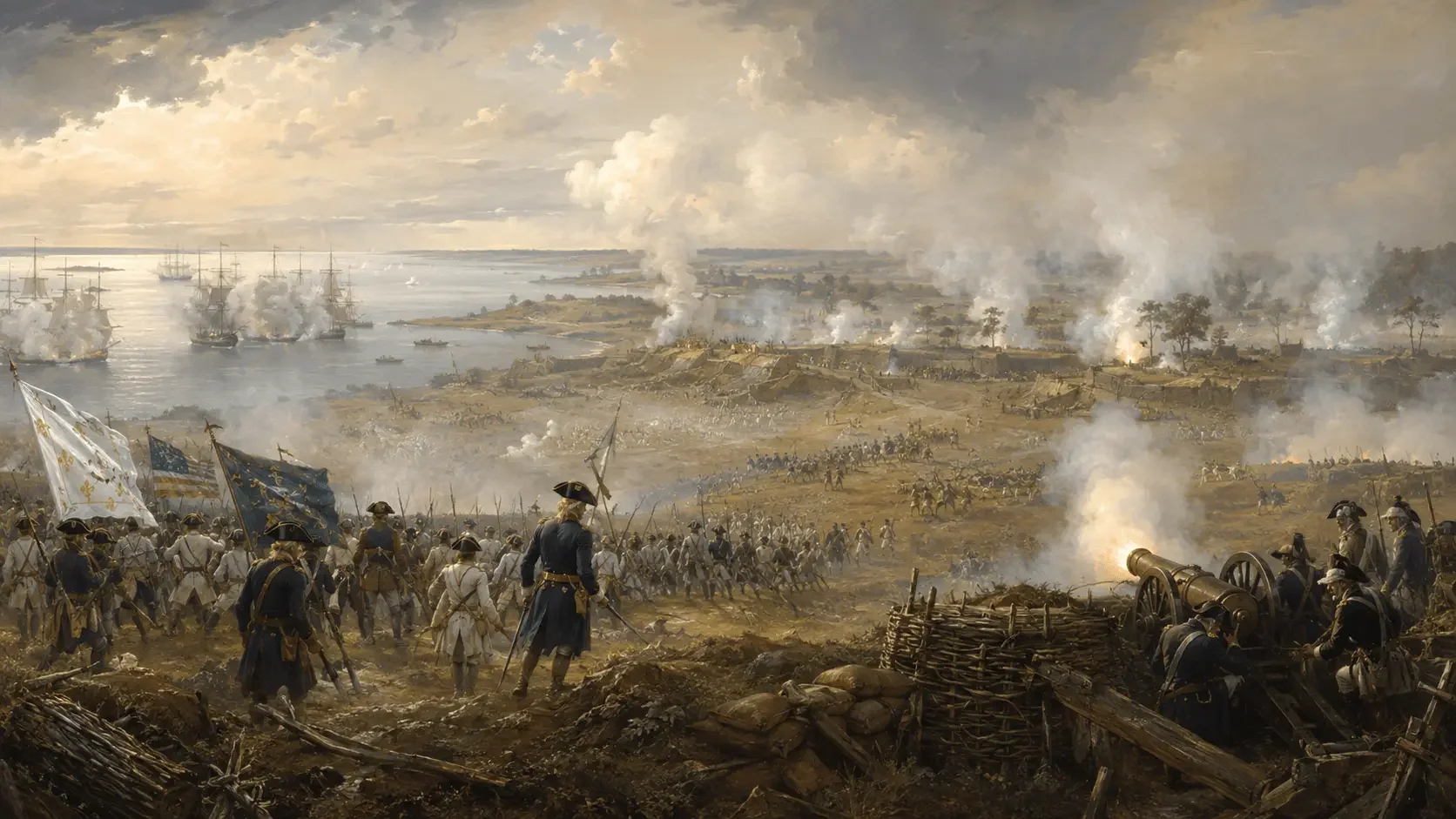
Washington and Rochambeau quickly shifted their combined armies south. The movement depended on secrecy, logistics, and cooperation between allied forces. At sea, de Grasse’s fleet fought the British in the Battle of the Chesapeake on September 5 and retained control of the bay, preventing a timely British relief effort. By late September, American and French forces had concentrated around Yorktown. The formal siege began on September 28 as the allies constructed parallel trenches and moved artillery closer to the British defenses.
Heavy bombardment steadily weakened Cornwallis’s position. On October 14, allied troops captured two important British redoubts that blocked the extension of the second siege line. American troops, including a force led by Alexander Hamilton, stormed Redoubt 10, while French troops attacked Redoubt 9. With allied artillery now able to operate at close range, the British position became increasingly untenable. Cornwallis attempted to move troops across the York River toward Gloucester Point, but bad weather disrupted the effort. On October 17, he requested terms.
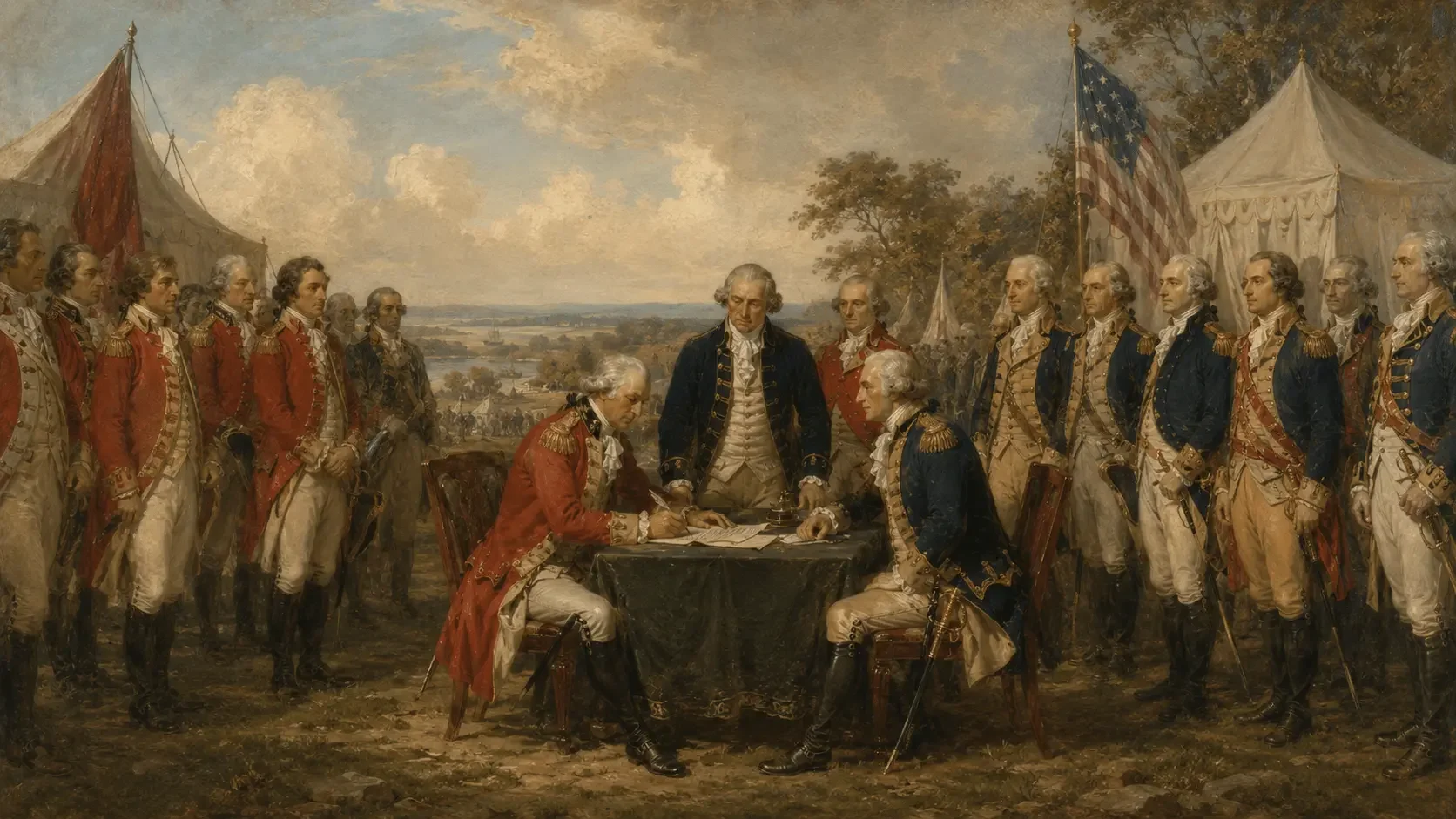
Negotiations took place at the Moore House, and the Articles of Capitulation were completed on October 18. The formal surrender occurred the next day, October 19. Cornwallis did not attend the ceremony, citing illness, and sent General Charles O’Hara in his place. O’Hara ultimately presented the surrender to American General Benjamin Lincoln. Yorktown was a decisive strategic defeat for Britain, but it did not legally end the war. Washington kept the Continental Army prepared, and diplomatic negotiations continued until the Treaty of Paris recognized American independence in 1783.
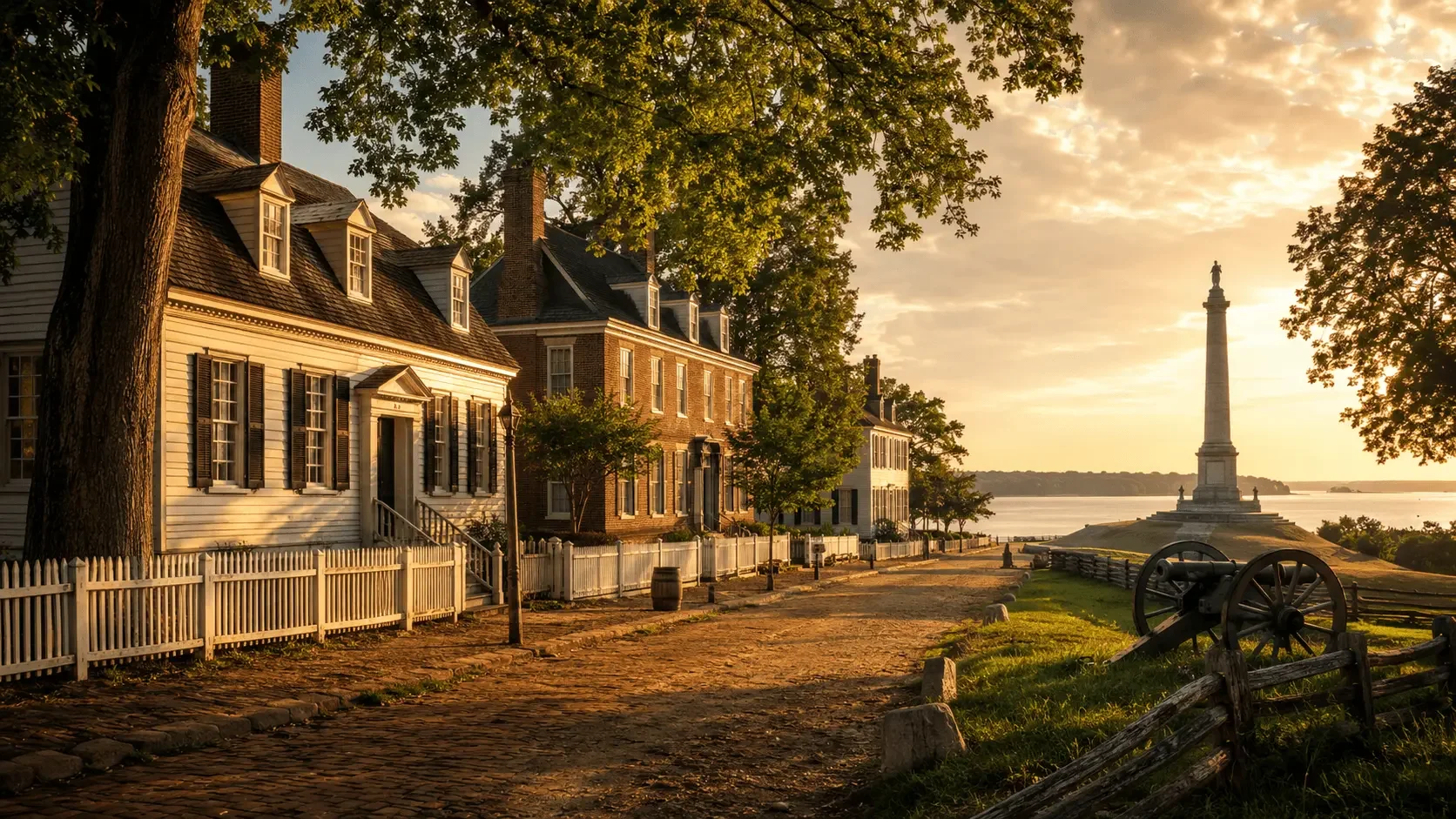
Yorktown Battlefield, part of Colonial National Historical Park, preserves the siege landscape, earthworks, and surrender field. The Moore House is also preserved as the place where surrender terms were negotiated. Visitors can therefore follow the campaign from military engineering and battlefield positions to the diplomatic process that converted victory into capitulation. The site is also a reminder that the American victory depended heavily on French soldiers, artillery, financing, and naval power.
Last updated August 13, 2026